In February 1851 a handful of men washing gravel on a creek between Bathurst and Orange found the first few specks of what would become Australia’s first payable goldfield. Within weeks of the find being announced, shepherds, clerks, sailors and farmers were walking over the Blue Mountains with picks and tin dishes. The rush they started remade the colony — and the country it passed through still carries the evidence: slab huts and stone banks, mullock heaps and poppet heads, cemeteries with Cornish, Irish, German and Chinese names, and roadside rocks where bushrangers lay in wait for the gold coach.
Gold Trails NSW is an independent guide to that country. We have mapped six recommended self-drive routes across the Central West, the Southern Tablelands and the South West Slopes, and written in-depth guides to the towns, people and stories you will meet along them. Everything here is checked against primary and official sources, and we link to them so you can read further.
Why the NSW goldfields are worth the drive
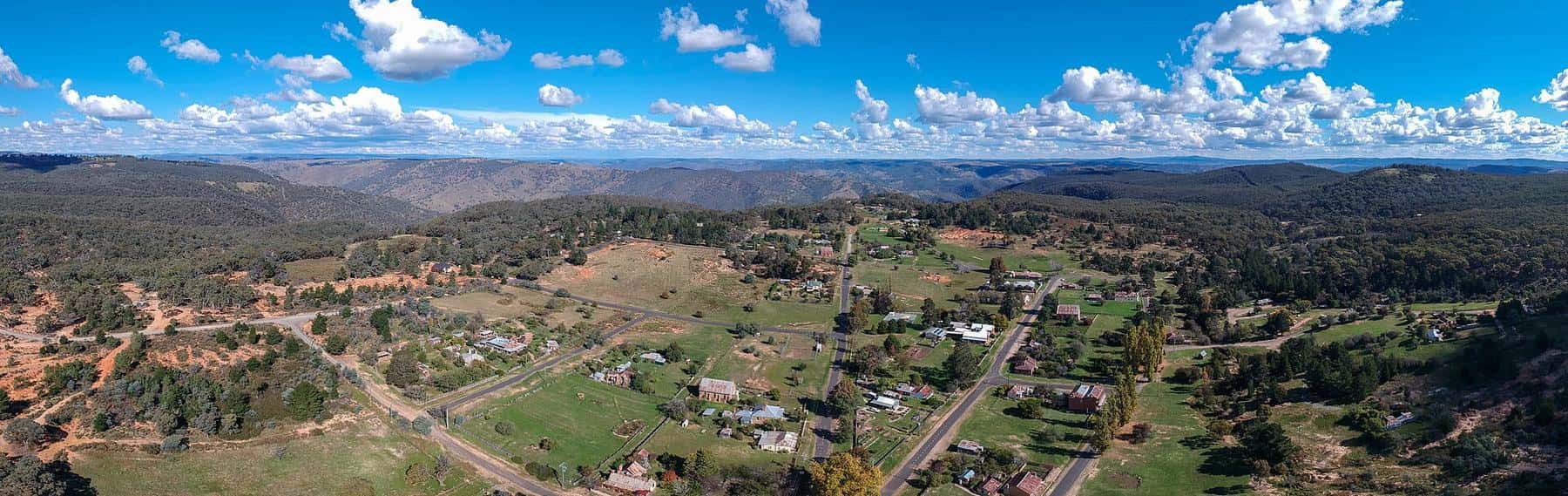
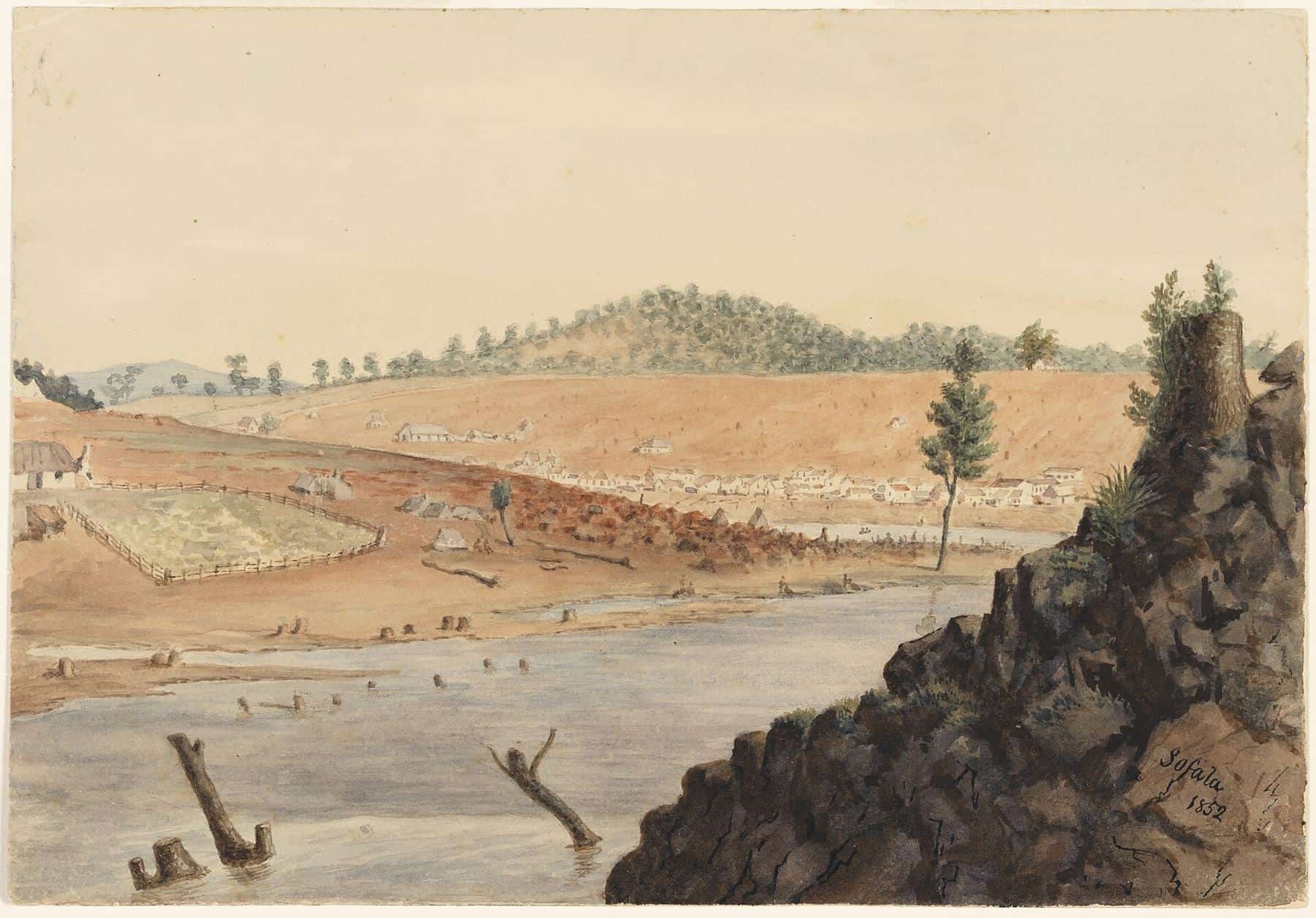
Victoria’s Ballarat and Bendigo get most of the attention, but the story began in New South Wales. The diggings at Ophir, on the Summer Hill and Lewis Ponds creeks, were followed within months by finds on the Turon River at Sofala, and over the next twenty years by rushes at Kiandra in the high country, Lambing Flat (now Young), the Lachlan at Forbes, Grenfell and Hill End. Each left a different kind of landscape.
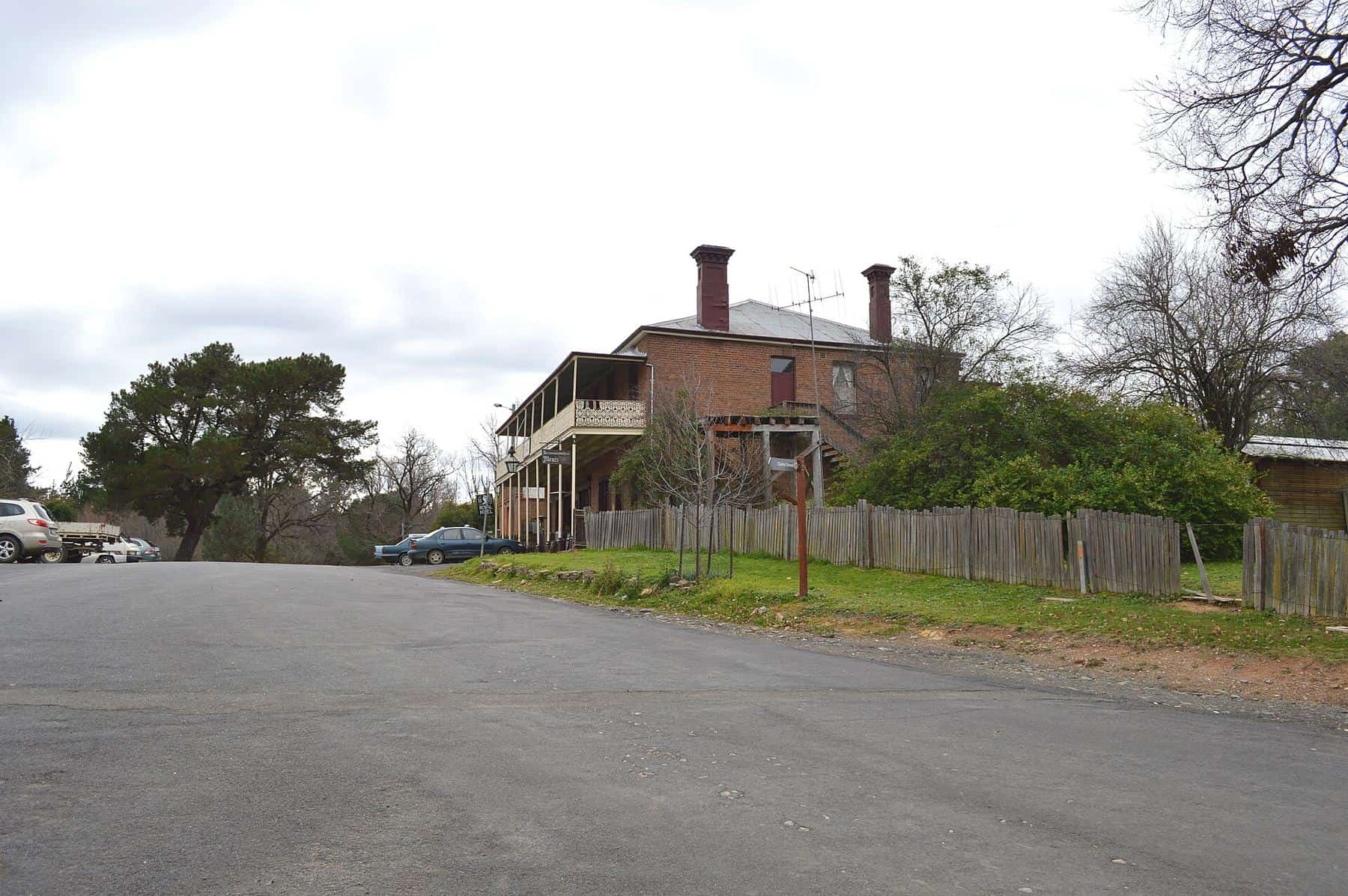
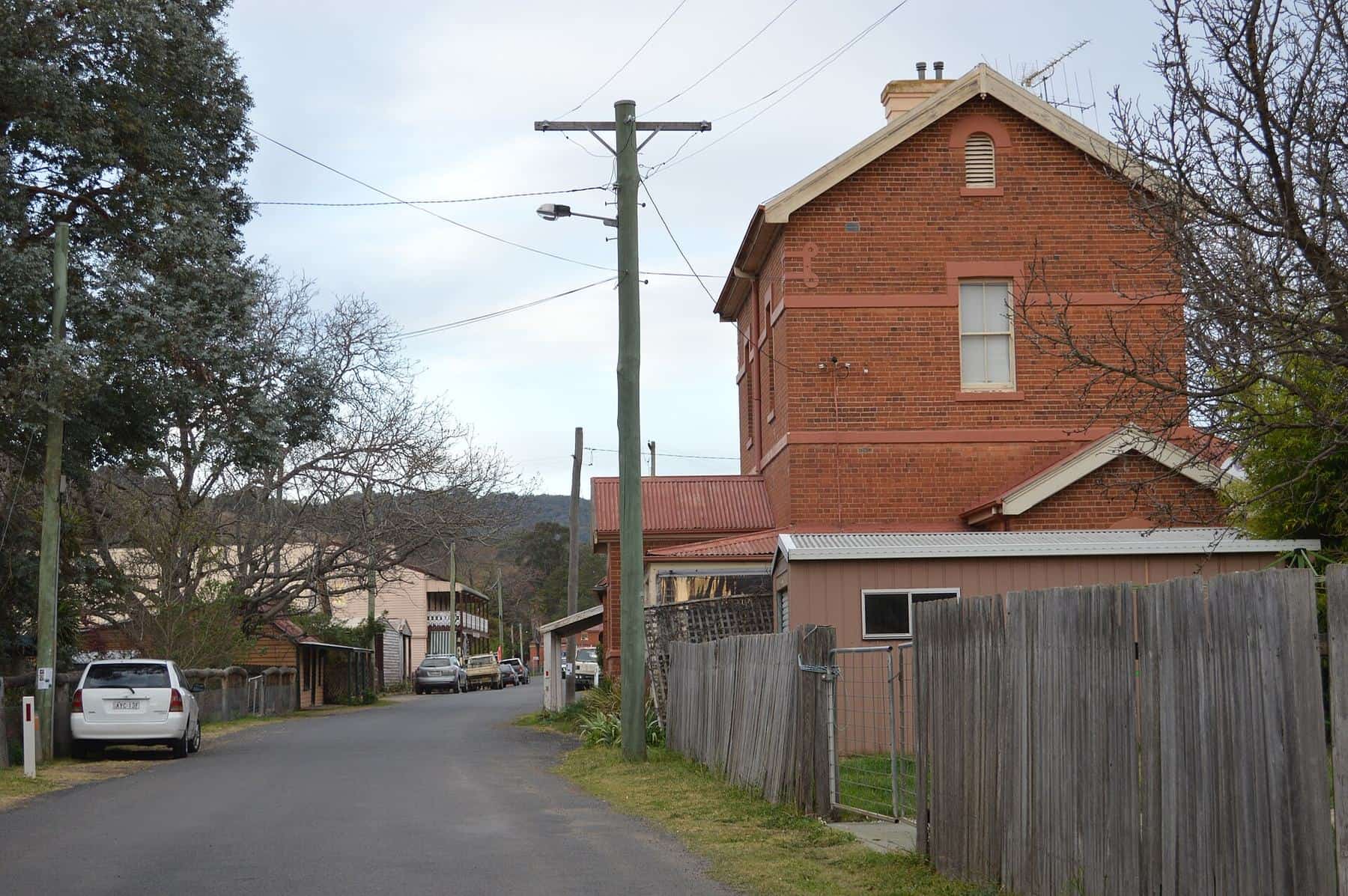
- Hill End is the best-preserved: a former boom town of several thousand people that faded so completely that its streets, cottages and hotels survive almost intact inside a historic site managed by NSW National Parks.
- Adelong has the substantial stone ruins of a gold-processing mill beside a waterfall, with the remains of the battery and water race still in place.
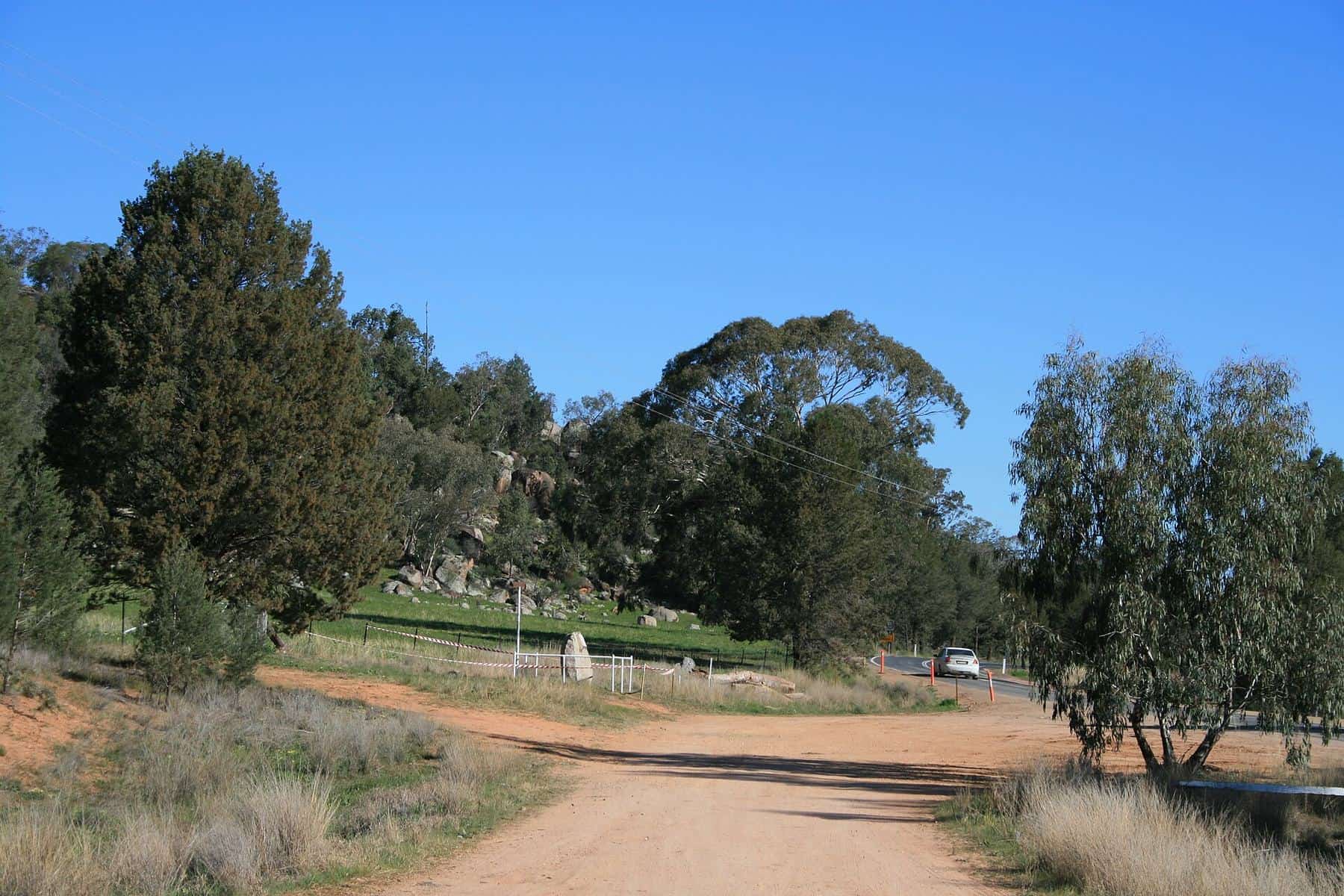
- Escort Rock, outside Eugowra, is where Frank Gardiner’s gang ambushed the Forbes gold escort in June 1862 and made off with 2,719 ounces of gold and £3,700 in cash.
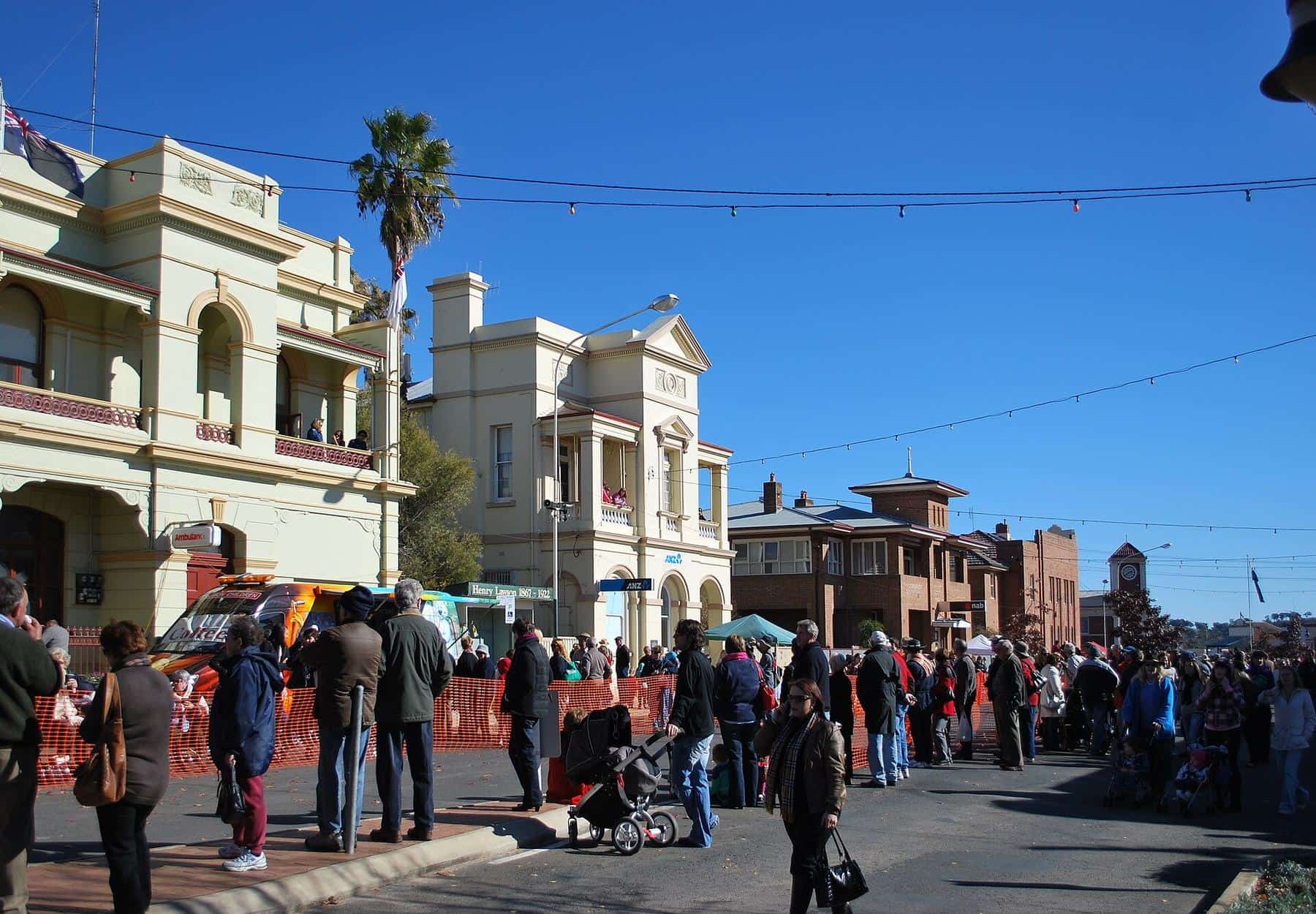
- Young confronts a harder story: the 1861 Lambing Flat riots against Chinese miners, which shaped colonial immigration law for decades.
- Kiandra, high in what is now Kosciuszko National Park, was briefly home to thousands of diggers in 1860 — and to some of Australia’s earliest recreational skiing.
How the six trails fit together
Our trails follow historic roads between the old diggings rather than the fastest highway route, and most can be linked.
The Escort Rock Gold Trail runs from Bathurst to Forbes via Orange, Ophir, Canowindra and Eugowra, following roughly the line of the old gold escort road. The Abercrombie Gold Trail climbs from Goulburn through Crookwell, Binda and Tuena to Abercrombie Caves and Bathurst — quieter roads, some gravel, and some of the prettiest villages in the state. The Ben Hall Gang Gold Trail traces the bushranger country between Yass and Forbes through Binalong, Harden, Young and Grenfell.
Further south, the Southern Gold Trail leaves Yass for Gundagai, Adelong, Tumut and the high plains at Kiandra. The South-Western Gold Trail heads out across the wheatbelt to the reef goldfields of Temora, Barmedman and West Wyalong, and the Newell Gold Trail links West Wyalong with Forbes, Parkes and Peak Hill.
Use the interactive map above to see each trail’s stops, distances and highlights, then open the full guide for town-by-town detail.
Planning a gold trails road trip
When to go. Autumn (March to May) and spring (September to November) are the most comfortable seasons for walking around old diggings. The Central West can be frosty in winter and very hot in summer, and the road to Kiandra runs through alpine country where snow and ice are possible from late autumn to spring — check Live Traffic NSW and National Parks alerts before you set out.
Where to base yourself. Bathurst and Orange are natural bases for the Escort Rock and Abercrombie trails; Young, Cootamundra and Gundagai for the southern routes; Forbes and Parkes for the western end. Hill End, Sofala, Grenfell and Adelong all have small-town accommodation if you want to wake up in a gold village.
What to pack. Sturdy shoes for uneven ground around mine sites, water, sun protection and offline maps — mobile coverage is patchy on back roads. If you plan to fossick, take a gold pan, a small trowel and a sieve, and read our fossicking guide for the rules.
Respect the sites. Old shafts and adits are dangerous; stay on marked paths and never enter old workings. Relics on heritage sites and in national parks are protected — leave them where they are.
The people behind the gold
The goldfields were never just about gold. The Wiradjuri, Ngunnawal, Gundungurra and other Aboriginal nations whose country the rushes overran experienced dispossession on a new scale, and some Aboriginal people also worked as trackers, guides and miners. Chinese diggers, who arrived in their thousands from the mid-1850s, worked the fields with patience and skill, built market gardens and temples, and endured violence and discriminatory laws. Cornish and Welsh hard-rock miners brought the skills to follow reefs underground. Many of the towns along the trails grew from these mixed communities, and their cemeteries, gardens and place names are part of what you are travelling to see. Our gold heritage section tells these stories in depth.
Bushrangers of the goldfields
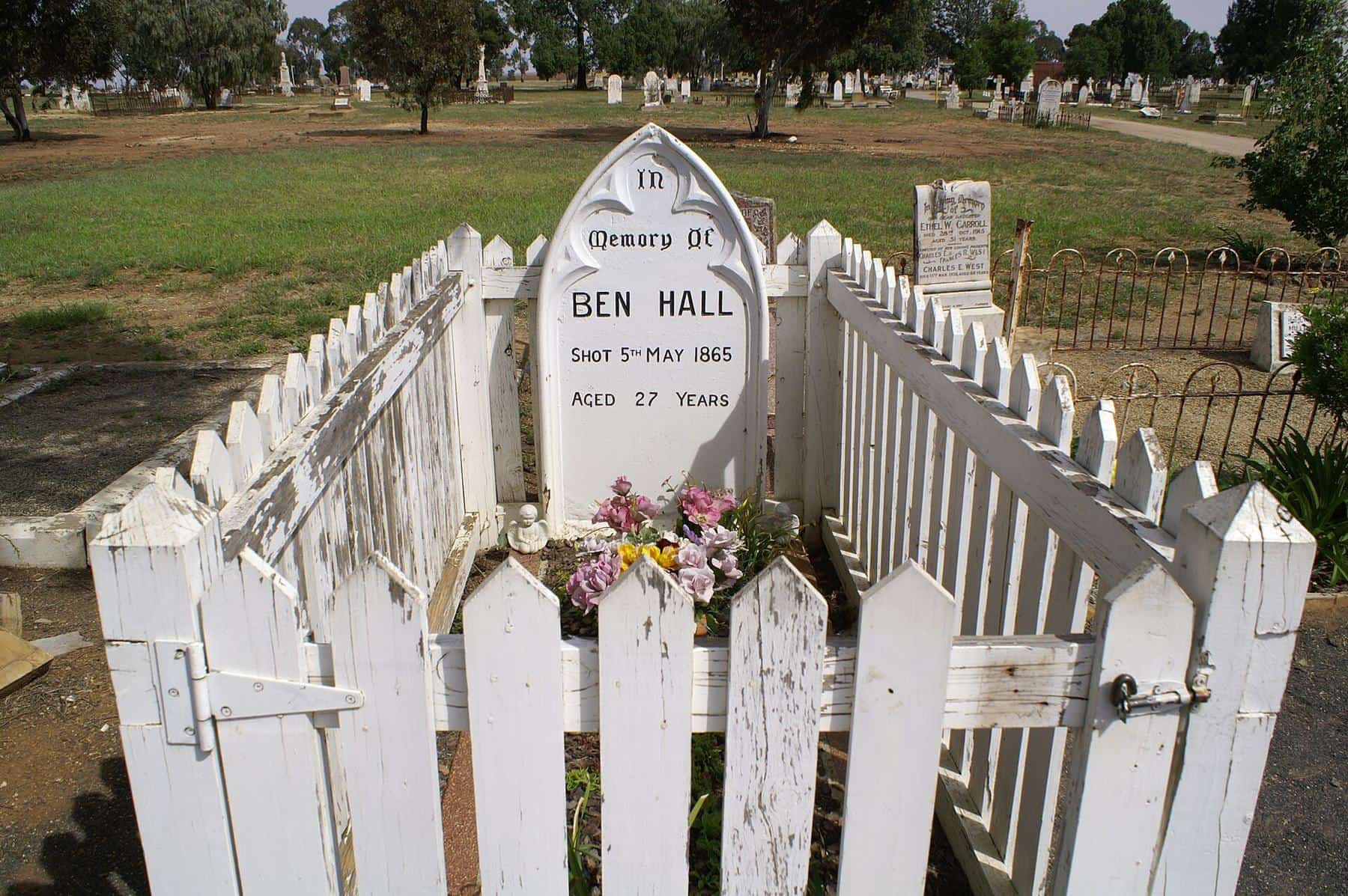
Gold travelling by coach from the diggings to the banks was an irresistible target. In the 1860s the roads between Yass, Young, Forbes, Bathurst and Goulburn were the territory of Frank Gardiner, Ben Hall, John Gilbert, John Dunn and others. Their robberies — and the police who pursued them — left graves, memorials and legends all along the trails, from Ben Hall’s grave in Forbes and Johnny Gilbert’s at Binalong to the memorials to Sergeant Edmund Parry, shot near Jugiong in November 1864. Read the full story in our guides to the bushrangers and the Escort Rock robbery.
How this guide is made
Gold Trails NSW is written by an independent editorial team. We are not a tourism body, council or tour operator, and nobody pays to be included. Facts are checked against sources such as the State Library of NSW, NSW National Parks, the NSW Resources Regulator, the Australian Dictionary of Biography and contemporary newspapers digitised on Trove. Opening hours, tours and road conditions change, so always confirm with the operator before you travel — and if you spot something out of date, tell us.