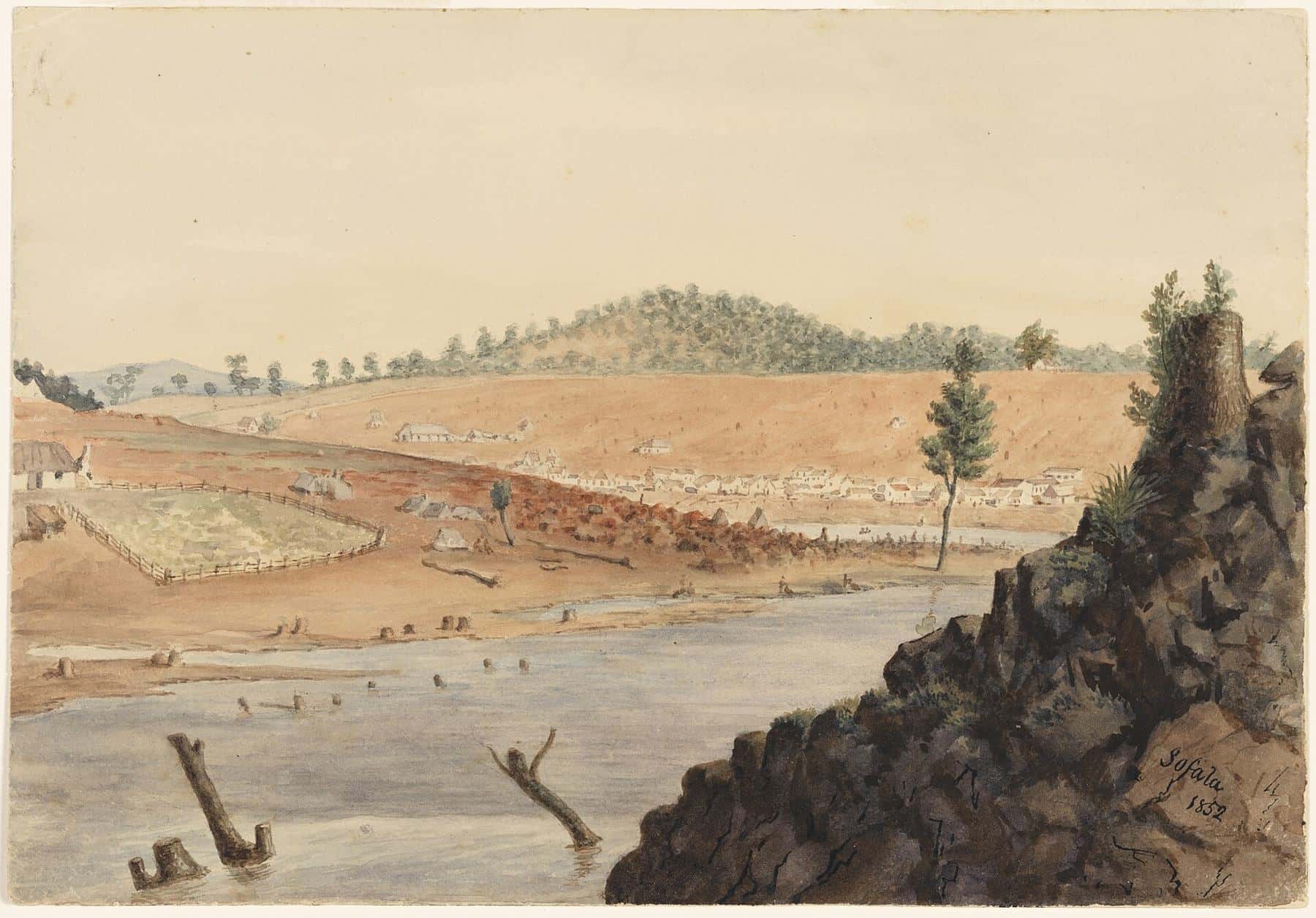
The gold rushes were the most transformative event in nineteenth-century New South Wales. In the decade after 1851 the colony’s population and economy were remade, new towns appeared across the inland, and the relationship between the colony and Britain began to shift. This section tells that story through the places you can still visit on the Gold Trails.
The discovery
For years shepherds and surveyors had picked up traces of gold west of the Blue Mountains, but the colonial government was wary of publicising them. That changed in 1851. Edward Hargraves, back from the Californian goldfields, teamed up with John Lister and the brothers William and James Tom to prospect the creeks between Bathurst and Orange. On 12 February 1851 they washed the first specks of gold from Lewis Ponds Creek. Lister and the Toms went on to find payable quantities while Hargraves pressed the government for a reward, and on 15 May 1851 the discovery was made public in Bathurst. Within weeks the diggings at Ophir were crowded. Read the full story in The 1851 discovery and the first rush.
Licences, commissioners and the escort
The government responded by declaring that all gold belonged to the Crown and requiring diggers to buy a licence — set at 30 shillings a month in 1851 — administered by gold commissioners with mounted police. Gold escorts carried the precious metal from the fields to Sydney. The escort system made the roads between the goldfields and the coast some of the most closely watched in the colony — and some of the most tempting for armed robbers.
Bushrangers
In the early 1860s, bushranging reached its peak on the Lachlan and southern goldfields. Frank Gardiner masterminded the Escort Rock robbery of June 1862. Ben Hall, John Gilbert and John Dunn carried out a run of hold-ups between 1863 and 1865, including raids on Canowindra and Binda and the fatal shooting of Sergeant Edmund Parry near Jugiong. The Felons Apprehension Act of 1865 allowed declared outlaws to be shot without warning; Ben Hall was killed by police near Forbes in May 1865 and Gilbert at Binalong days later. Our bushrangers guide follows them across the map.
The Chinese contribution
From the mid-1850s Chinese miners arrived in large numbers, mostly from Guangdong province. They often worked ground others had abandoned, organised in co-operative groups, and supplied the goldfields with vegetables from their market gardens. Their success drew resentment. At Lambing Flat, near today’s Young, European miners attacked Chinese camps repeatedly in 1860 and 1861, culminating in the riot of 30 June 1861. The NSW Parliament then passed an Act to regulate and restrict Chinese immigration, assented to on 22 November 1861. Read The Lambing Flat riots and the Chinese on the goldfields.
Reefs, companies and the long tail
Alluvial gold ran out quickly, but quartz reefs could be worked for decades by companies with capital for shafts, steam engines and stamper batteries. Hill End’s Hawkins Hill reefs produced the famous Holtermann specimen in October 1872. Adelong, Lucknow, Grenfell, Temora and Wyalong all had substantial reef-mining eras. The mill ruins, poppet heads and mullock heaps you see along the trails mostly date from this phase.
Heritage you can visit today
- Hill End Historic Site — a gold town preserved by NSW National Parks since 1967. See our Hill End guide.
- Adelong Falls Gold Mill Ruins — stonework and machinery foundations of a reef-gold processing mill.
- Escort Rock — the granite outcrop near Eugowra where the 1862 gold escort was ambushed.
- Lambing Flat Folk Museum, Young — including the “Roll Up” banner associated with the 1861 riots.
- Ophir Reserve — the site of the 1851 discovery, now a public fossicking area.
Explore the year-by-year heritage chronology for a timeline of key events.
Guides in this section
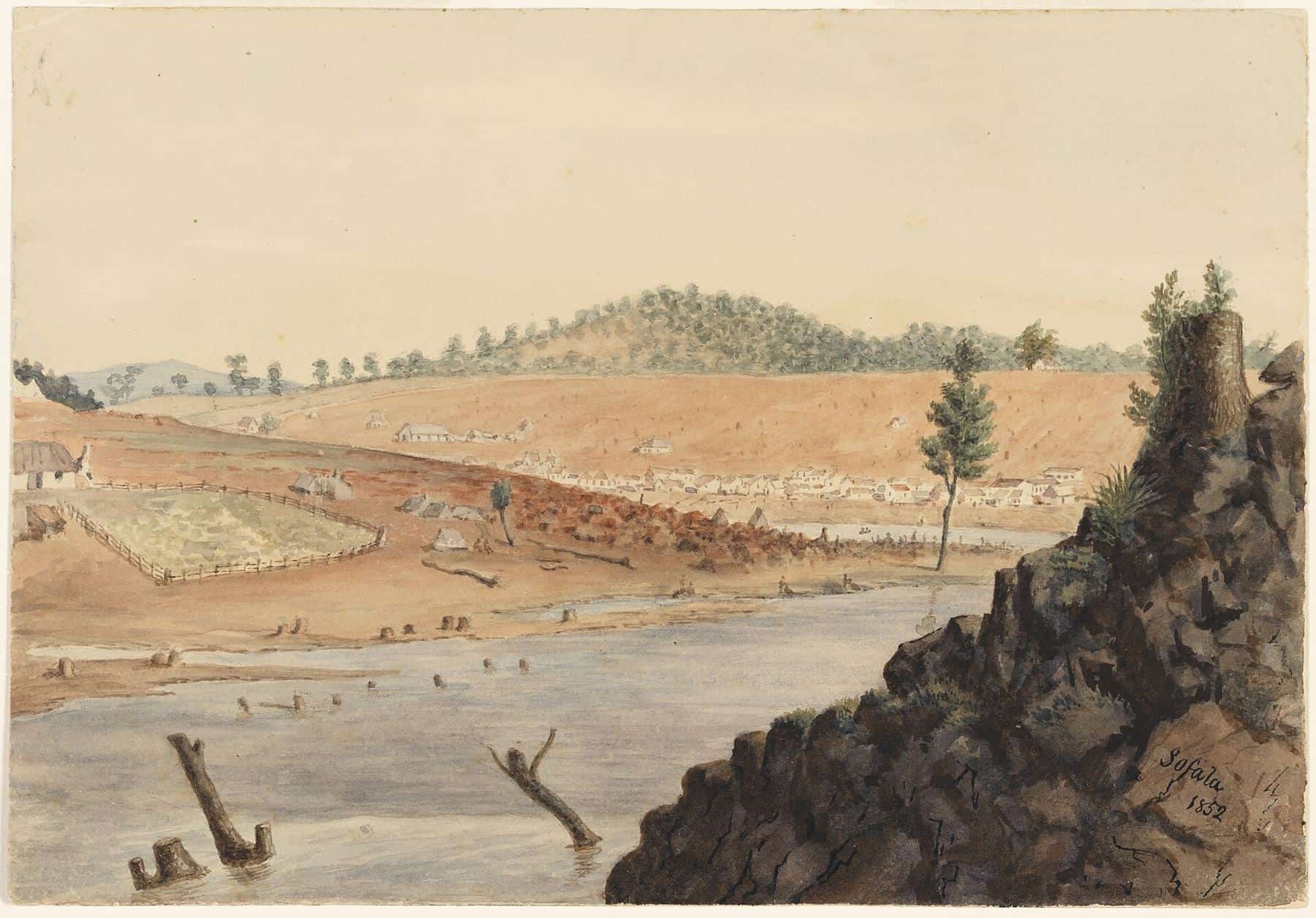
Gold heritage
The 1851 discovery and the first NSW gold rush
How Edward Hargraves, John Lister and the Tom brothers found Australia’s first payable gold at Ophir in 1851, and the long dispute over credit.
Read · 4 min
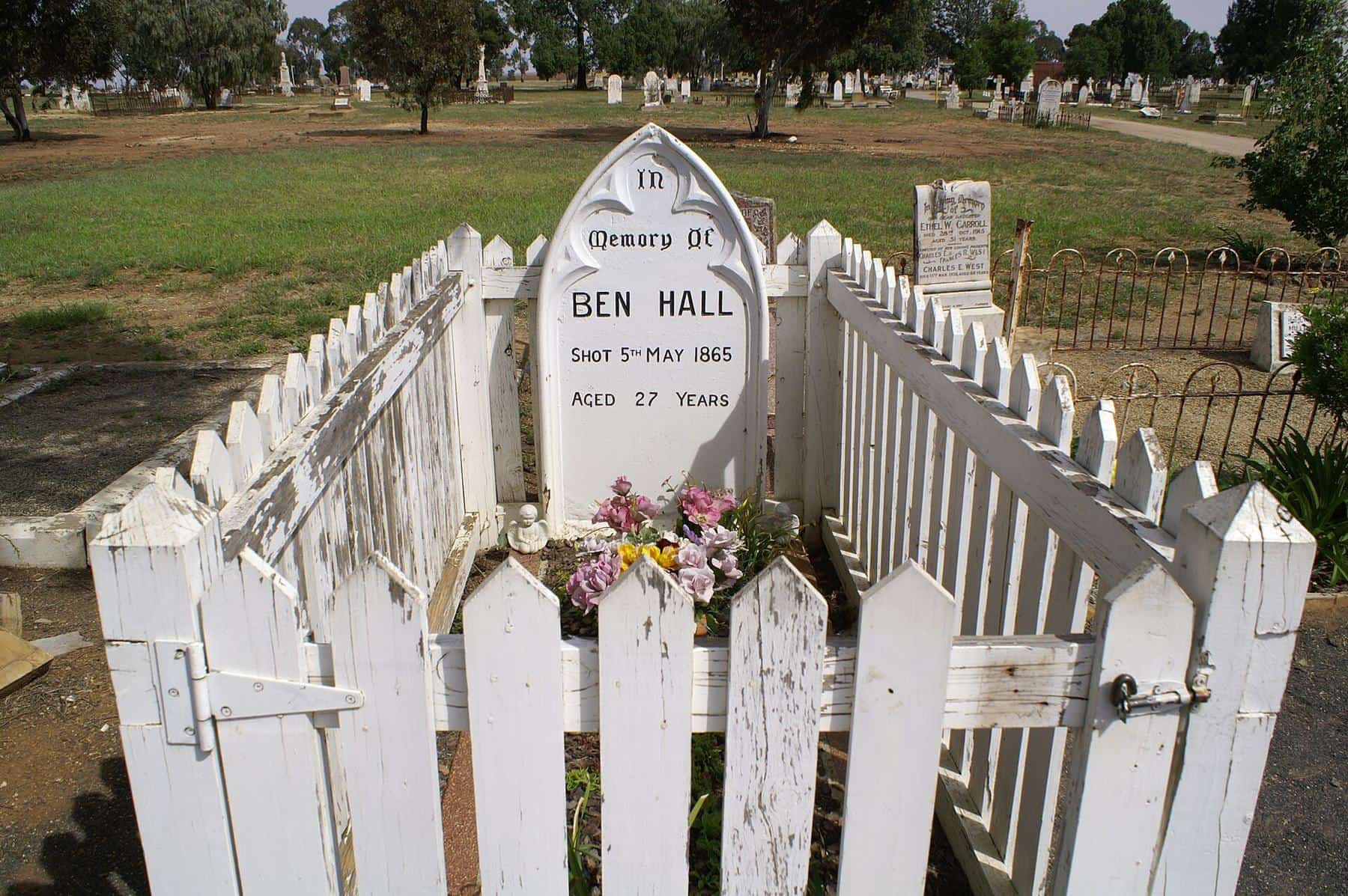
Gold heritage
Bushrangers of the NSW goldfields
Frank Gardiner, Ben Hall, John Gilbert, John Dunn and the police who hunted them: the 1860s bushranging era on the NSW goldfields.
Read · 4 min
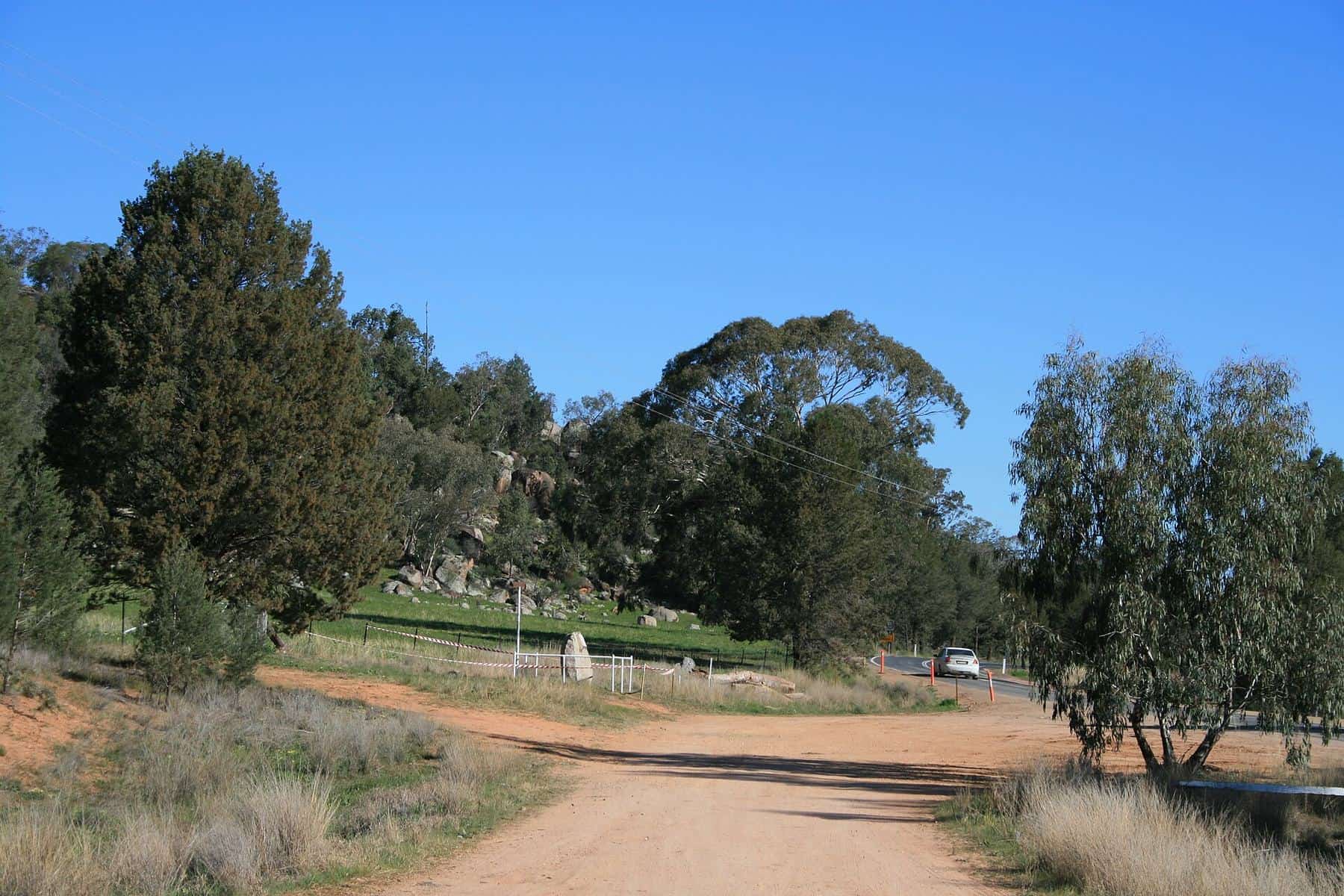
Bushrangers
The Escort Rock robbery, 15 June 1862
The 1862 Eugowra gold escort robbery: Frank Gardiner’s gang, the ambush at Escort Rock, 2,719 oz of gold and £3,700 taken, and the pursuit.
Read · 4 min
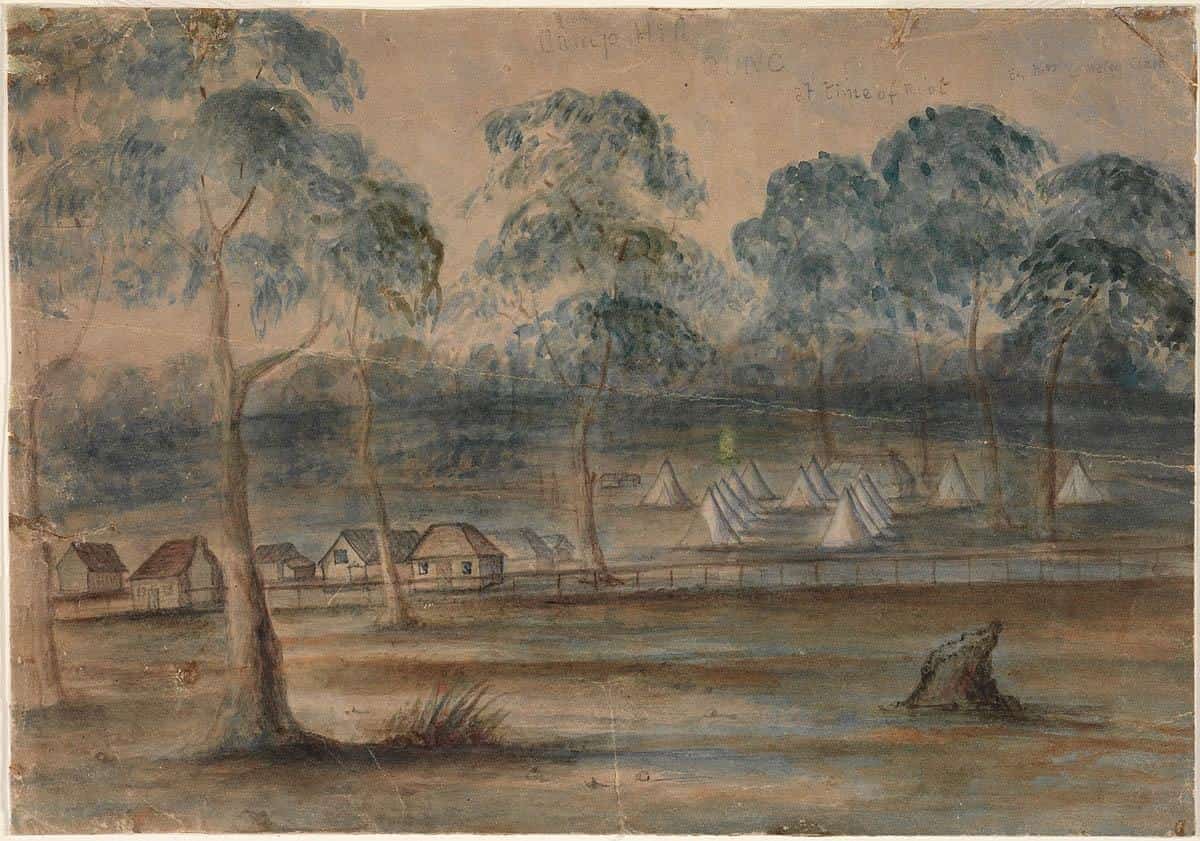
Gold heritage
Lambing Flat and the Chinese on the NSW goldfields
The Lambing Flat riots at present-day Young, the Chinese miners of the NSW goldfields, the 1861 restriction law and the places that remember them.
Read · 3 min
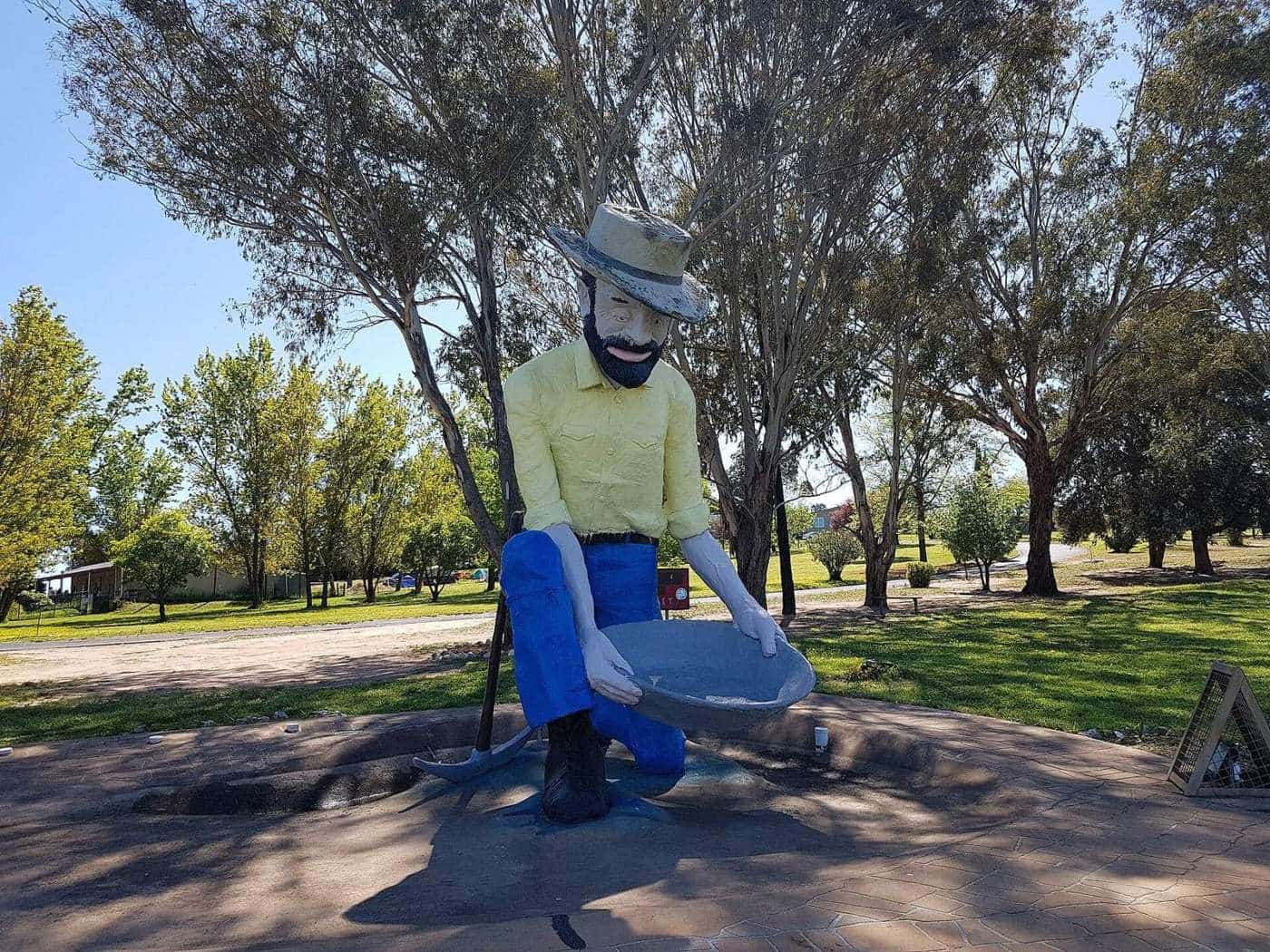
Practical guide
Gold fossicking in NSW — a beginner’s guide
A beginner’s guide to gold fossicking in NSW: the rules, landholder permission, where to go on the Gold Trails, equipment and how to pan.
Read · 4 min
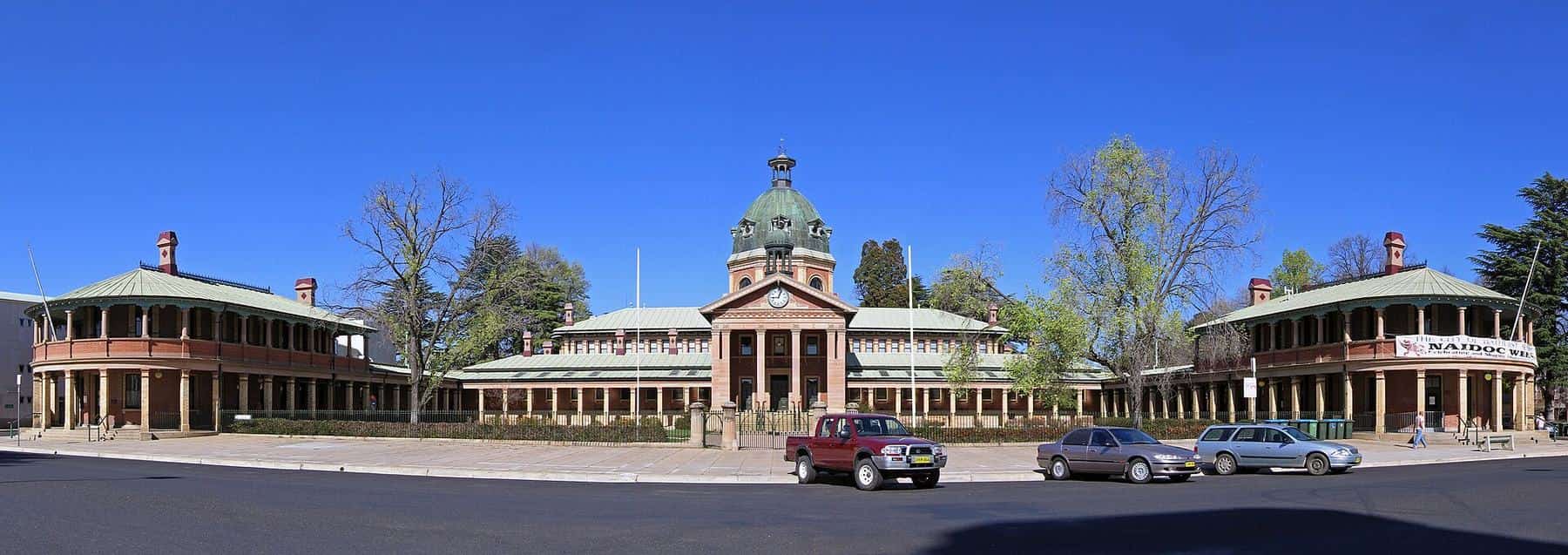
Chronology
NSW gold rush timeline, 1851–1900s
An interactive NSW gold rush timeline, from the 1851 Ophir discovery through Lambing Flat, Escort Rock and Ben Hall to the Hill End reef boom.
Read · 3 min
Frequently asked questions
When was the NSW gold rush?
The NSW gold rush began in May 1851, after the discovery at Ophir near Orange was announced in Bathurst. Major rushes followed through the 1850s and 1860s at Sofala, Kiandra, Lambing Flat (Young), Forbes, Grenfell and Hill End, with later reef goldfields developing into the 1890s.
Why were there so many bushrangers in the 1860s?
Gold moving by coach from remote diggings to city banks, a thinly spread police force and a sympathetic network of relatives and friends in the bush made the Lachlan and southern goldfields fertile ground for armed robbery in the early 1860s.
What happened to the Chinese miners in NSW?
Thousands of Chinese miners worked the NSW goldfields from the 1850s. They faced hostility culminating in the Lambing Flat riots of 1861 and discriminatory immigration laws. Many later returned to China; others stayed and became market gardeners, storekeepers and community leaders in country towns.
Sources and further reading
Facts on this page were checked against these primary and official sources. Conditions change — confirm before you travel or buy.
- Gold! — Discover Collections — State Library of NSW
- Australian Dictionary of Biography — Australian National University
- Trove digitised newspapers — National Library of Australia