Bushranging is as old as European settlement in Australia, but the 1860s were its most dramatic decade in New South Wales. Gold travelling by coach from the Lachlan and southern diggings, a police force spread thin across vast distances, and a web of family and friends willing to shelter wanted men created the conditions for a string of bold robberies. This guide introduces the main figures and the places on the Gold Trails where you can follow their stories.
Why the goldfields bred bushrangers
The rushes put enormous amounts of portable wealth on the roads. Gold was carried by government escorts, by banks and by individual diggers; mail coaches carried banknotes and registered letters. At the same time, many young men in the selection districts around the goldfields had grown up with horses, guns and a deep knowledge of the bush, and some had little love for the police. Stock theft often led to highway robbery. Relatives and sympathisers — known to police as “bush telegraphs” — passed on warnings and hid fugitives.
Frank Gardiner
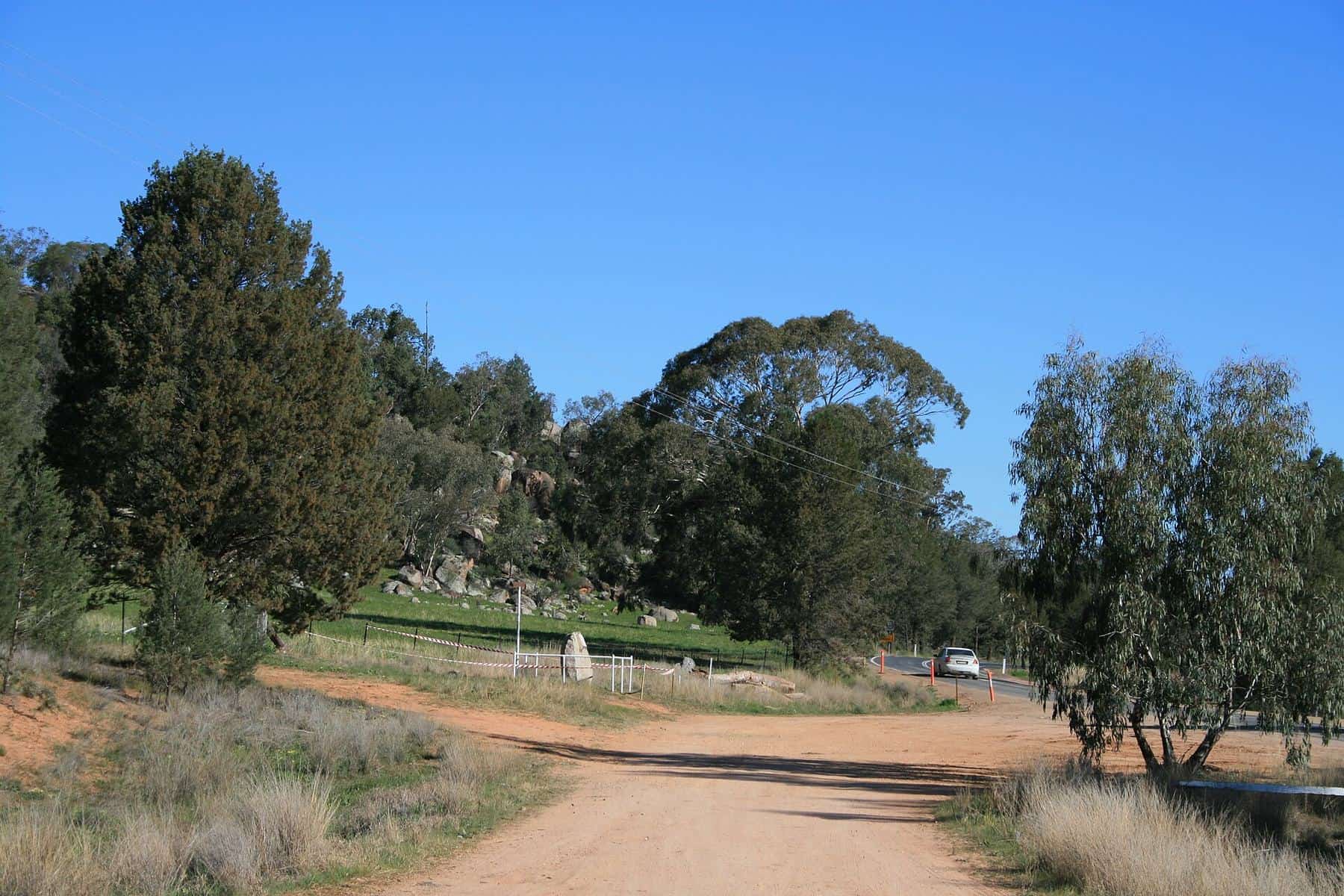
Francis Christie, better known as Frank Gardiner, was the most accomplished of the early-1860s bushrangers. Born in Scotland and raised in the Goulburn district, he had served time for horse theft before setting himself up as a highway robber on the Lachlan around 1861. His great coup was the robbery of the Forbes gold escort at Escort Rock, near Eugowra, on 15 June 1862, when his gang took 2,719 ounces of gold and £3,700 in cash. Police pursuit recovered part of the gold, and several gang members were caught. Gardiner himself vanished north, where he lived under another name until he was arrested in Queensland in 1864. Sentenced to 32 years’ hard labour, he was released in 1874 on condition of exile and died in the United States. Read the full Escort Rock robbery story.
Ben Hall
Ben Hall was born in 1837 and grew up in the Hunter and Lachlan districts. He worked as a stockman and held a run near the Weddin Mountains. Arrested on suspicion of involvement in robberies — and later for the Escort Rock robbery, for which he was acquitted of some charges — he found his property neglected and his family life in ruins, and from 1863 he took to bushranging in earnest.
Over the next two years Hall’s gang robbed travellers, coaches, stores and stations across a wide area between Bathurst, Forbes, Young, Yass and Goulburn. Some raids were theatrical: in October 1863 they occupied Canowindra for several days, and on Boxing Day 1864 they held up Binda during a dance. Others turned deadly. Gang member John O’Meally shot storekeeper John Barnes near Wallendbeen in November 1863. On 16 November 1864, during a mail-coach hold-up near Jugiong, Sergeant Edmund Parry was shot dead.
John Gilbert and John Dunn
John Gilbert, born in Canada, was among Hall’s most constant companions and was involved in many of the gang’s most violent episodes, including the Jugiong hold-up. John Dunn, a young recruit, joined late in 1864; in January 1865 he shot Constable Samuel Nelson at Collector, near Goulburn.
The Felons Apprehension Act and the end of the gang
In April 1865 the NSW Parliament passed the Felons Apprehension Act, which allowed a court to declare a bushranger an outlaw. An outlaw could be shot without warning, and anyone harbouring one faced heavy penalties. Hall, Gilbert and Dunn were declared outlaws.
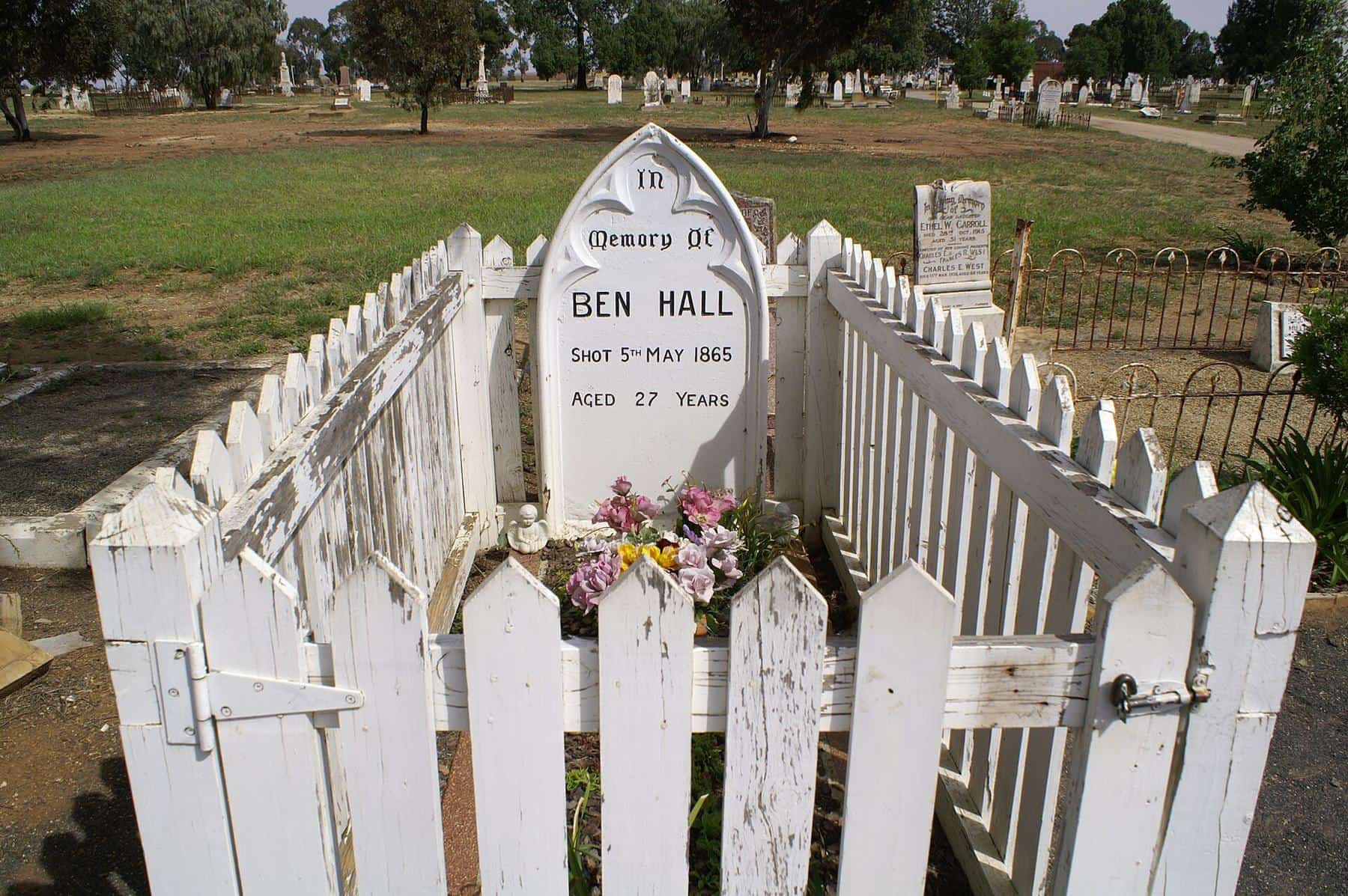
On 5 May 1865, acting on information, police surrounded Hall’s camp on Goobang Creek, north-west of Forbes, at dawn and shot him dead. He was buried in Forbes cemetery. Eight days later, on 13 May, police found Gilbert and Dunn at a house near Binalong; Gilbert was killed and is buried nearby. Dunn escaped wounded, was captured at the end of 1865 and was hanged in Sydney in March 1866.
Other names you will meet on the trails
- John Piesley — an early Lachlan bushranger and associate of Gardiner, hanged in 1862.
- John O’Meally and John Vane — members of Hall’s gang in 1863. O’Meally was shot dead during a raid in late 1863; Vane surrendered.
- Captain Thunderbolt — Frederick Ward, who ranged the New England district further north until 1870.
- Captain Moonlite — Andrew George Scott, whose gang’s siege at Wantabadgery Station near Gundagai in 1879 ended in deaths on both sides; he was hanged in 1880 and reburied in Gundagai in 1995.
Legend and reality
Ballads, novels and films have turned Ben Hall in particular into a folk hero — a decent man pushed into crime by harsh treatment. Historians stress a more complicated picture. The gang rarely shot to kill and was sometimes courteous to its victims, but its raids terrified communities, damaged businesses and cost lives, including those of police officers with families. Visiting both the bushranger graves and the police memorials along the trails is the best way to see the whole story.
Where to follow the bushrangers
Bushranger sites on the Gold Trails
0 of 8 done
Ticks are saved in this browser only.
The Ben Hall Gang Gold Trail links most of these sites in a single day’s drive from Yass to Forbes, while the Escort Rock Gold Trail takes in Canowindra, Escort Rock and Forbes from Bathurst.
Frequently asked questions
Who was the most famous NSW bushranger?
Ben Hall is the best known of the NSW goldfields bushrangers. Between 1863 and 1865 his gang carried out a long series of robberies across central and southern NSW before he was shot by police near Forbes on 5 May 1865.
What was the Felons Apprehension Act?
A NSW law passed in April 1865 that allowed bushrangers to be declared outlaws. Once declared, an outlaw could be shot by anyone without warning, and helping one became a serious offence.
What happened to Frank Gardiner?
Gardiner left NSW after the 1862 Escort Rock robbery and was arrested in Queensland in 1864. Sentenced to 32 years, he was released in 1874 on condition he leave the colony, and he spent his later years in the United States.
Which police officers were killed by the Hall gang?
Sergeant Edmund Parry was shot near Jugiong in November 1864, and Constable Samuel Nelson was shot at Collector in January 1865 by John Dunn.
Sources and further reading
Facts on this page were checked against these primary and official sources. Conditions change — confirm before you travel or buy.
- Hall, Benjamin (Ben) (1837–1865) — Australian Dictionary of Biography
- Gardiner, Francis (Frank) (1830–1903) — Australian Dictionary of Biography
- Gilbert, John (1842–1865) — Australian Dictionary of Biography
- Escort Rock — Wikipedia (with contemporary newspaper references)
- Trove digitised newspapers — National Library of Australia