The Lachlan goldfield was booming in 1862. Every week a government escort carried the diggers’ gold and the banks’ cash from Forbes towards Orange, on the way to Sydney. On Sunday 15 June, that escort never arrived.
15 Jun 1862
Date
Sunday afternoon
2,719 oz
Gold taken
Plus £3,700 in cash
≈£14,000
Contemporary value
As reported at the time
The escort
The coach left Forbes with a driver, John Fagan, and four police: Sergeant James Condell rode on the box beside Fagan, and Senior Sergeant Moran and two constables travelled inside. The treasure was consigned by three banks. According to the detailed accounts published afterwards, it comprised gold and cash for the Oriental Bank, gold for the Bank of New South Wales, and gold and cash for the Commercial Bank — in total about 2,719 ounces of gold and £3,700 in notes and coin. There was also a heavy mail with registered letters.
The ambush
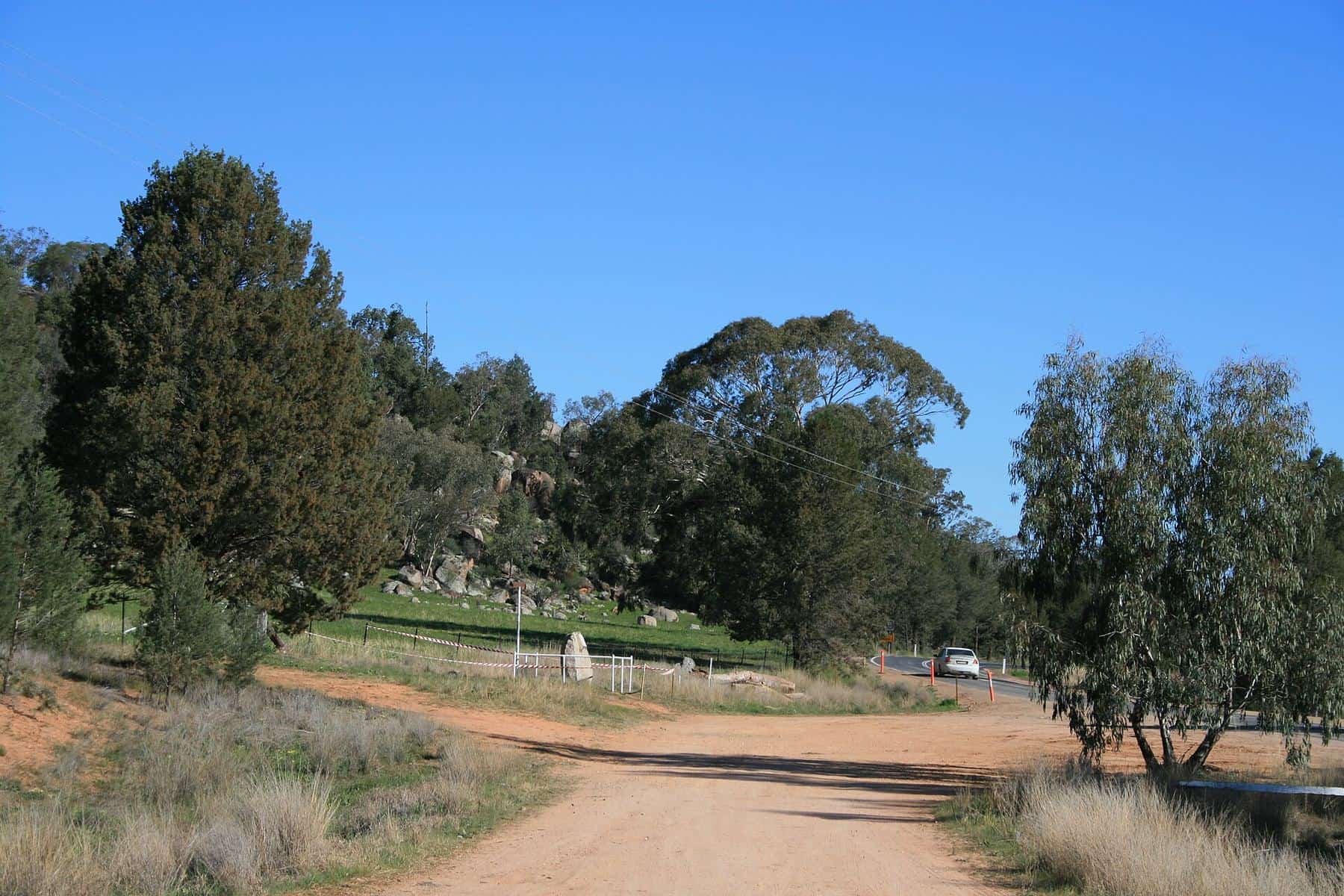
In the late afternoon, a few kilometres east of present-day Eugowra, the road passed close beneath a cluster of large granite boulders. Two bullock drays had been halted across the road, forcing Fagan to slow to a walk to pass between them and the rocks. As the coach drew level, a party of men concealed behind the boulders opened fire. Witnesses said they wore red serge shirts and red caps and had blackened their faces. They fired in disciplined volleys, one group falling back to reload as another fired.
Sergeant Condell was hit in the side and Senior Sergeant Moran in the groin. The horses, struck or terrified, bolted; the coach hit rocks and overturned. Fagan and the police scattered into the scrub. Condell later reported that a single voice gave the orders to fire and load — a voice he recognised as Frank Gardiner’s. The gang loaded the strongboxes and mailbags onto two of the coach horses and rode off.
The alarm
The driver and police made their way to Eugowra homestead, and the station owner rode to Forbes with the news. That night, the diggings were in uproar. A strong police party, guided by an Aboriginal tracker, set off in pursuit the next morning.
The pursuit
The gang had split up and headed for the rough country around the Weddin Mountains. Police surprised part of the gang near their hideout, and after a long chase one rider abandoned an exhausted packhorse carrying a large share of the gold. More gold and notes were recovered when gang member Henry Manns was arrested west of Forbes. Accounts of exactly how much was recovered differ, but it is generally agreed that a substantial part of the gold was returned to the banks, while the rest — including, it was said, Gardiner’s and Hall’s shares — was never accounted for. Stories of buried escort gold in the Weddin Mountains have circulated ever since.
The gang
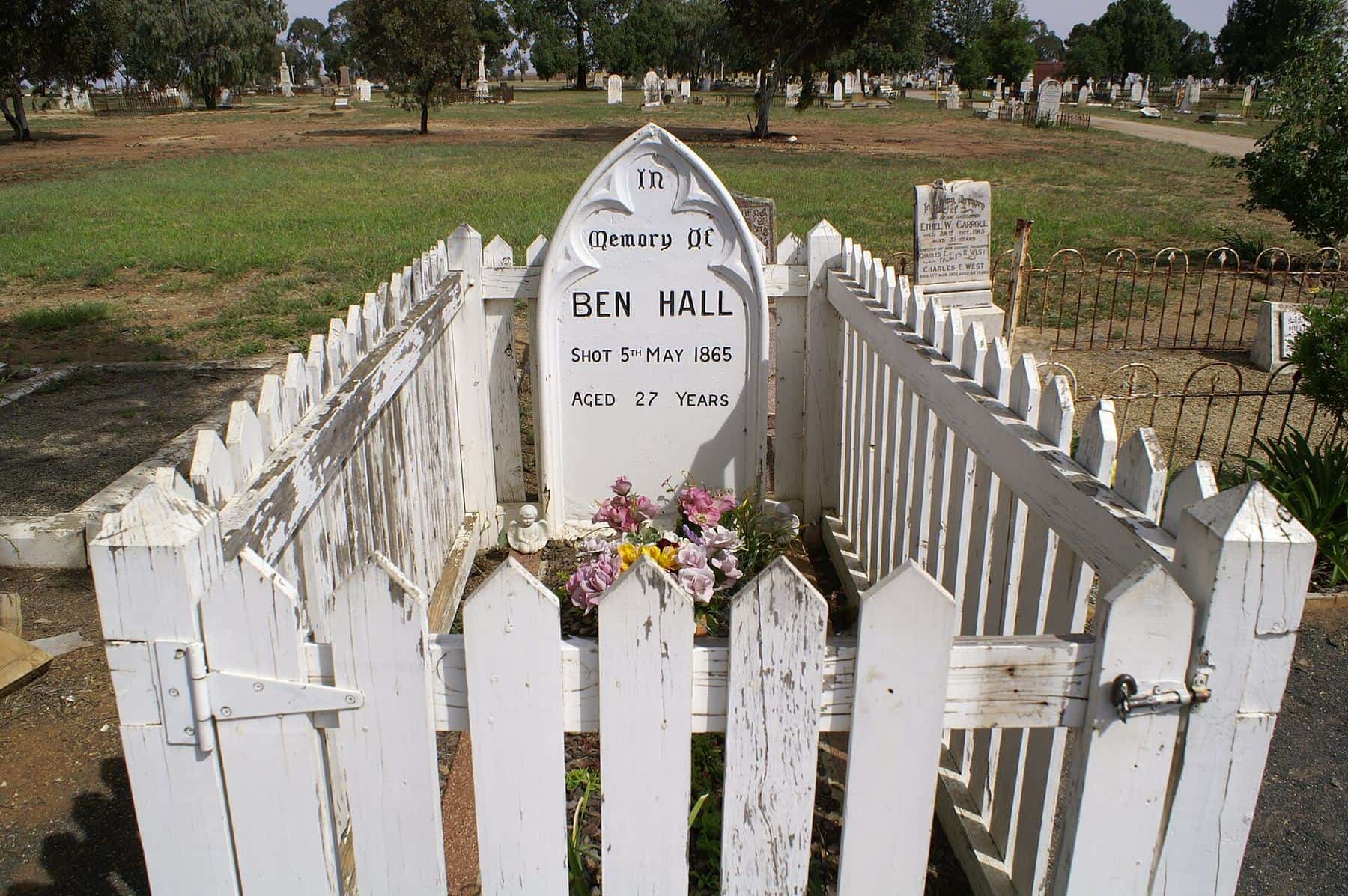
Those later identified as taking part included Frank Gardiner, Johnny Gilbert, John Bow, Alexander Fordyce, Henry Manns, Daniel Charters, Ben Hall and John O’Meally. Charters turned Queen’s evidence. Manns was convicted and hanged. Bow and Fordyce were sentenced to death, later commuted. Hall was arrested but not convicted over the robbery and went on to lead his own gang. Gilbert escaped to Victoria for a time before returning to bushranging with Hall.
Gardiner fled north and lived quietly as a storekeeper in Queensland until he was recognised and arrested in 1864. Tried in Sydney, he was sentenced to 32 years’ hard labour. A public campaign later won his release in 1874 on condition that he leave the colony; he died in the United States.
How big was it?
The Escort Rock robbery is usually described as the largest gold robbery in Australian history. Converting a nineteenth-century sum into today’s money is notoriously difficult — the result depends on whether you use the price of gold, wages or general prices — so modern estimates range from a few million dollars to more than eight million. What is certain is that 2,719 ounces is more than 84 kilograms of gold, and that the robbery stunned the colony and transformed the way gold escorts were protected.
Why it mattered
The robbery exposed how vulnerable the escort system was and fed a public outcry about bushranging and policing on the goldfields. It also launched the careers of men such as Ben Hall and John Gilbert, whose raids dominated the next three years and led directly to the Felons Apprehension Act of 1865. Read more in our bushrangers guide.
Visiting Escort Rock today
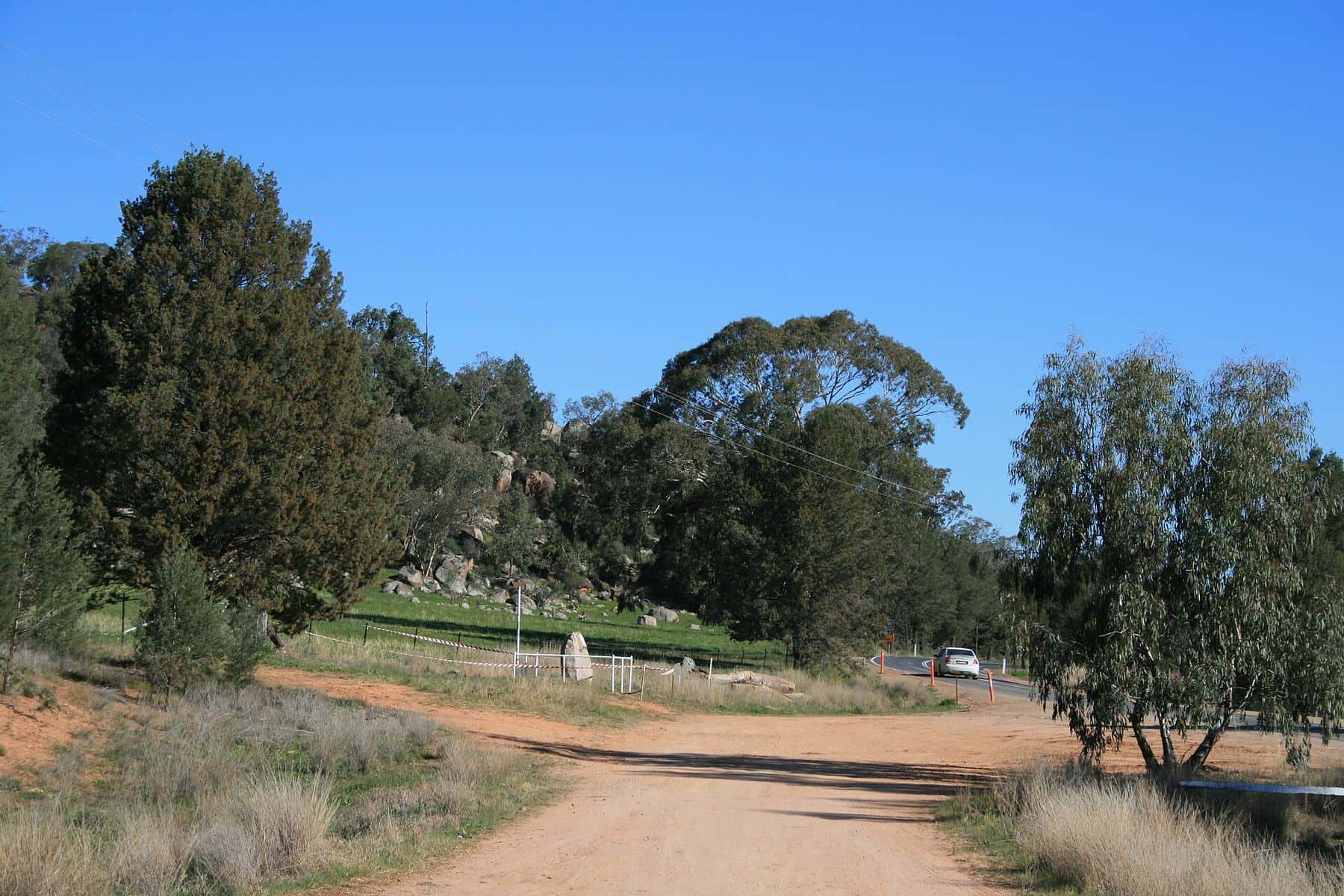
Escort Rock sits beside the Escort Way, a few kilometres east of Eugowra. The roadside area has signs explaining the robbery and you can still pick out the line of the original coach road and wheel ruts near the rocks. In Eugowra, murals on buildings retell the story. The site is on our Escort Rock Gold Trail between Canowindra and Forbes.
Frequently asked questions
How much was stolen at Escort Rock?
The coach carried 2,719 ounces of gold and £3,700 in cash for three banks. Contemporary accounts valued the haul at roughly £14,000; modern estimates of its present-day value vary widely depending on the method used.
Who robbed the gold escort at Eugowra?
Frank Gardiner’s gang. Members later identified included Johnny Gilbert, John Bow, Alexander Fordyce, Henry Manns, Daniel Charters, Ben Hall and John O’Meally.
Was the Escort Rock gold ever found?
Much of it was recovered. Police caught up with part of the gang near the Weddin Mountains and recovered a large quantity of gold, and more was found when Henry Manns was arrested. Some of the haul was never accounted for, which has fuelled treasure legends ever since.
Can you visit Escort Rock?
Yes. Escort Rock is beside the Escort Way a few kilometres east of Eugowra. A roadside area has interpretive signs and you can see the line of the original coach road.
Sources and further reading
Facts on this page were checked against these primary and official sources. Conditions change — confirm before you travel or buy.
- Escort Rock — Wikipedia (with contemporary newspaper references)
- Frank Gardiner and the Eugowra escort robbery — Central NSW Museums
- Gardiner, Francis (Frank) (1830–1903) — Australian Dictionary of Biography
- Trove — Sydney Morning Herald and regional newspapers, June 1862 — National Library of Australia