Gold drew people to New South Wales from every corner of the world, and among the largest groups were miners from southern China, mostly from Guangdong province. Many arrived through Victorian ports and walked north, or came via Sydney, working the rivers and old diggings with patience and skill. Their presence — and the hostility it provoked — shaped the history of the goldfields and of Australia’s immigration laws.
1860–61
Riots
Lambing Flat, now Young
30 Jun 1861
Worst attack
Chinese camps destroyed
14 Jul 1861
Riot Act read
Confrontation at the police camp
The Chinese on the goldfields
Chinese miners commonly worked in organised groups, often under a headman, and many were bound by credit arrangements to merchants who paid their passage. They were known for reworking ground that others had abandoned, for market gardening that fed the diggings, and for building temples, stores and joss houses in camps across the colony. Many intended to return home with their earnings; others stayed, married and settled in country towns, where their descendants still live.
European miners often resented them. The objections were partly economic — competition for water and ground — and partly rooted in the racial attitudes of the time. Language and cultural differences fuelled suspicion, and agitators on several fields campaigned to drive the Chinese away.
The Lambing Flat goldfield
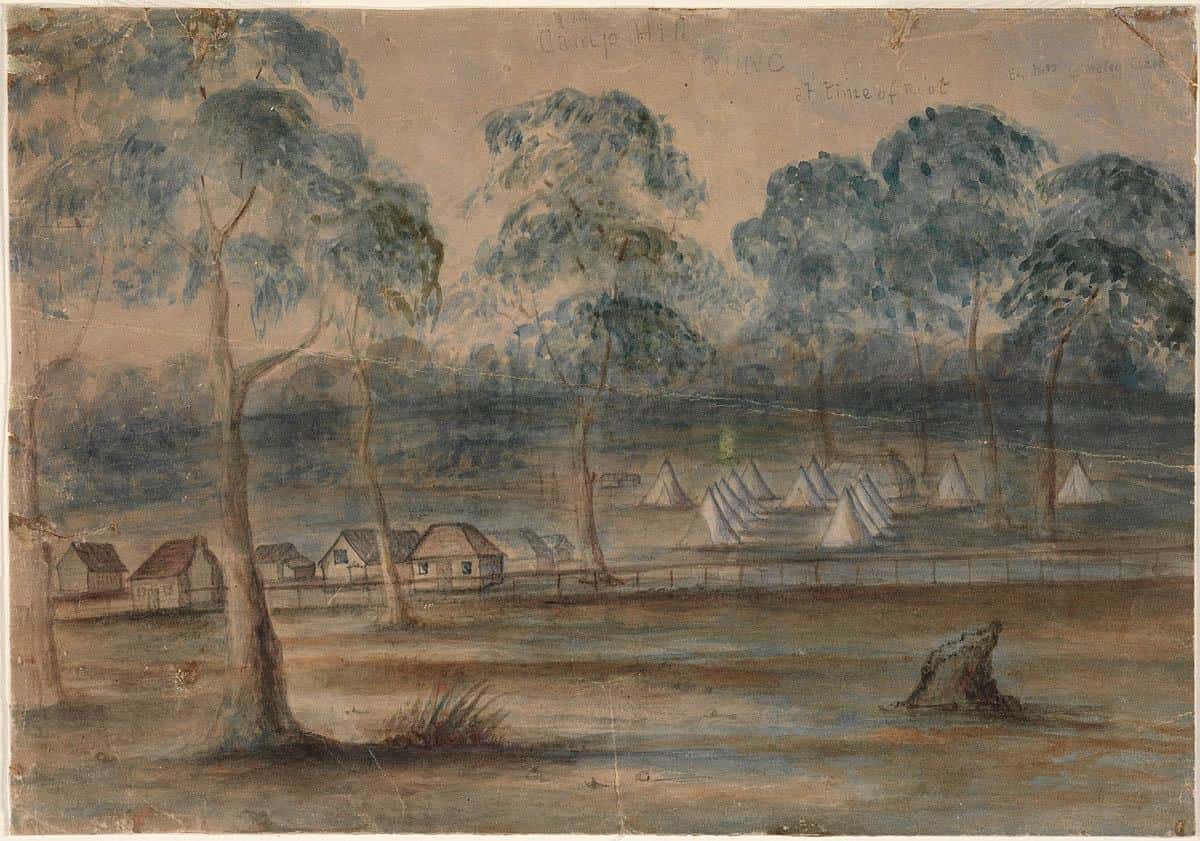
Gold was found at Lambing Flat, on the Burrangong run in the south-west slopes, in 1860. The rush grew quickly and the field attracted thousands of diggers, including a large Chinese population. Tension rose over access to ground and water. From late 1860 European miners organised “roll-ups” — mass meetings and marches — to expel the Chinese from parts of the field.
The June 1861 attack
The worst violence came on 30 June 1861. A large crowd of European miners, accompanied by a band and carrying a painted canvas banner reading “Roll Up — No Chinese”, marched on Chinese camps at Back Creek and elsewhere. Tents were burned, possessions stolen and many Chinese miners beaten; some had their pigtails cut off. Hundreds fled. Pastoralist James Roberts of Currawong station gave shelter to a large number of the refugees on his property, an act still remembered locally.
The Riot Act and the police camp
Police arrested several men involved. On 14 July 1861, a crowd gathered at the police camp to demand their release. The Riot Act was read, and in the confrontation that followed police fired on the crowd. A miner, William Lupton, was killed and others were wounded. The police temporarily withdrew from the field, and the government sent soldiers, sailors and artillery from Sydney to restore order. Few of the attackers were ever convicted.
The 1861 restriction law
The riots added pressure for legislation. Later in 1861 the NSW Parliament passed the Chinese Immigration Restriction Act, which imposed a poll tax on Chinese arrivals and limited the number who could travel on each ship. It was repealed in 1867, but similar measures returned in later decades, and the attitudes on show at Lambing Flat fed into the restrictive immigration policies adopted after Federation in 1901.
A town renamed
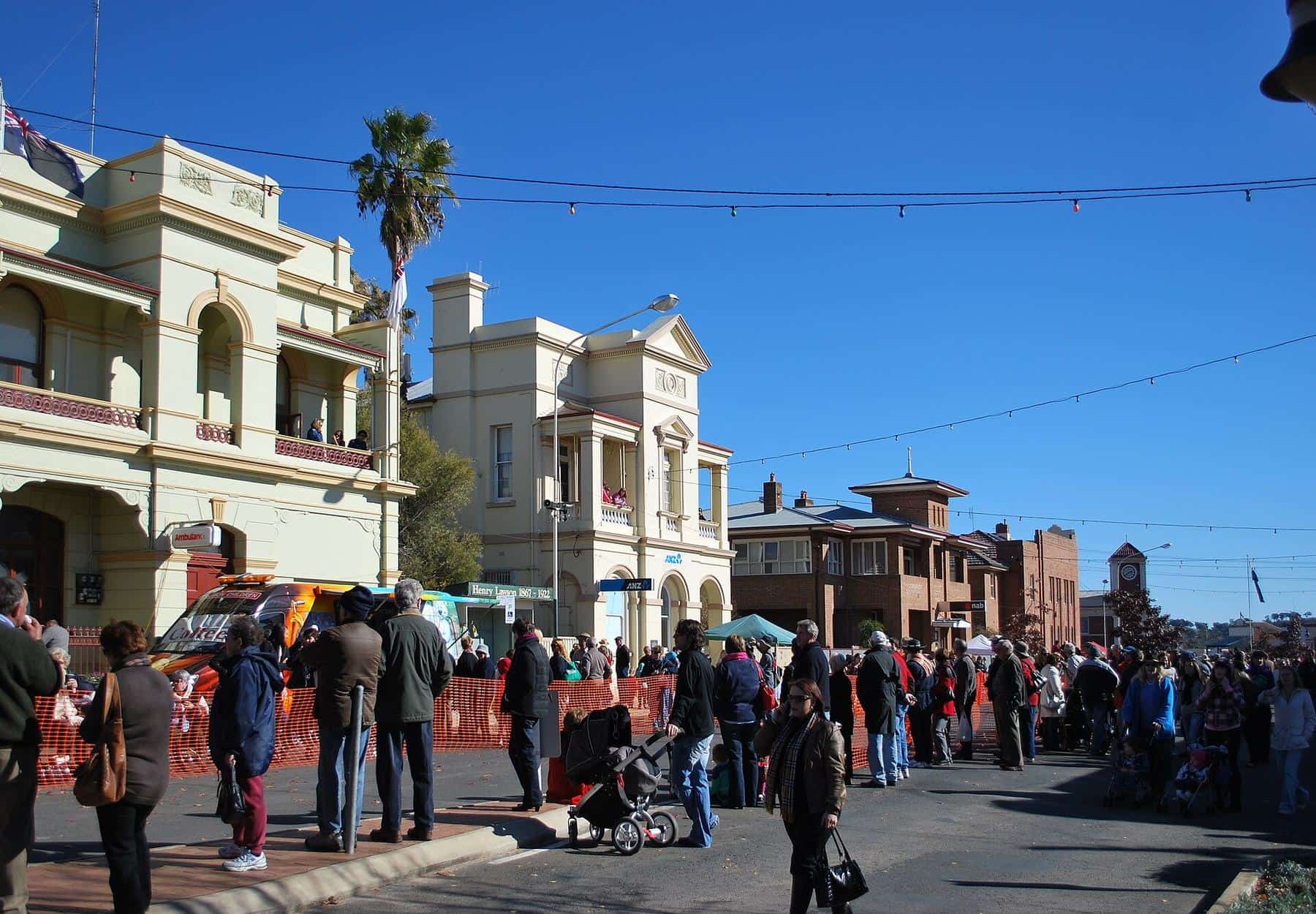
In 1861 the settlement was renamed Young, after the then Governor of NSW, Sir John Young. Today Young is best known for its cherries, but it confronts the Lambing Flat story directly.
Remembering today
Lambing Flat sites in and around Young
0 of 5 done
Ticks are saved in this browser only.
- Lambing Flat Folk Museum holds the original roll-up banner, one of the most significant and confronting objects of the gold era.
- The Chinese Tribute Garden at Chinaman’s Dam is a peaceful garden acknowledging the Chinese contribution to the district.
- Elsewhere on the trails, look out for Chinese sections of cemeteries, the remains of market gardens and, in Victoria and northern NSW, surviving temples.
Young sits on our Ben Hall Gang Gold Trail, so the Lambing Flat sites fit easily into a drive between Yass and Forbes. See the heritage chronology for how the riots fit into the wider story of the NSW rushes.
Frequently asked questions
What were the Lambing Flat riots?
A series of attacks by European miners on Chinese miners at the Lambing Flat goldfield, now the town of Young, between late 1860 and mid-1861. The worst, on 30 June 1861, saw Chinese camps destroyed and many Chinese miners beaten and robbed.
Was anyone killed at Lambing Flat?
During a confrontation at the police camp on 14 July 1861, after the Riot Act had been read, a miner named William Lupton was shot dead. Reports of Chinese deaths during the June attacks are uncertain and contested.
What law followed the Lambing Flat riots?
The NSW Chinese Immigration Restriction Act of 1861 imposed a poll tax on Chinese arrivals and limited how many could travel on each ship. It was repealed in 1867, though later restrictions followed.
Where can I learn about Lambing Flat today?
The Lambing Flat Folk Museum in Young holds the famous roll-up banner, and the Chinese Tribute Garden at Chinaman’s Dam reflects on the Chinese contribution to the district.
Sources and further reading
Facts on this page were checked against these primary and official sources. Conditions change — confirm before you travel or buy.
- Lambing Flat riots — Wikipedia (with archival references)
- Lambing Flat Roll Up Banner — National Museum of Australia — Defining Moments
- Chinese Immigration Restriction Act 1861 (NSW) — Museum of Australian Democracy — Documenting a Democracy
- Trove digitised newspapers, 1860–61 — National Library of Australia