On 12 February 1851, on a creek north-east of where the city of Orange now stands, a man who had come back from California washed a dish of gravel and found a few tiny specks of gold. That moment — and the arguments about who deserved the credit for it — set off the first great gold rush in Australian history.
12 Feb 1851
First gold washed
Lewis Ponds Creek
15 May 1851
Discovery announced
In Bathurst
30 shillings
Monthly licence
Set by the NSW government in 1851
Gold before the rush
Gold was not unknown in New South Wales before 1851. Surveyors, geologists and shepherds had reported traces west of the Blue Mountains for years, including the Polish explorer Paul Strzelecki and the clergyman-geologist William Branwhite Clarke. But the colonial authorities, still governing a society with a large convict population, were nervous about what a gold rush might do to order and labour. Reports were kept quiet.
Events overseas changed the calculation. The California gold rush of 1848–49 drew thousands of people from Australia across the Pacific, and the colony was losing labour and capital. If there was gold at home, there was an argument for finding it.
Hargraves, Lister and the Toms
Edward Hammond Hargraves had spent time on the Californian diggings and noticed that the country there resembled the country he knew west of Bathurst. He returned to Sydney early in 1851 and rode west to test the idea. At Guyong, between Bathurst and Orange, he met John Lister, the son of an innkeeper, who had been looking for gold himself. Lister led him to a spot on Lewis Ponds Creek, and there, on 12 February 1851, Hargraves washed a few pans of gravel and found specks of gold.
Hargraves then taught Lister and the brothers William and James Tom how to build and use a Californian cradle — a rocking wooden box that separates heavy gold from lighter gravel. While Hargraves travelled to Sydney to negotiate with the Colonial Secretary for a reward, Lister and the Toms kept working. Further downstream they found about four ounces of gold, including a two-ounce nugget that William Tom spotted in a rock crevice. Hargraves bought these samples and used them to press his case.
The announcement
On 15 May 1851 Hargraves spoke publicly in Bathurst about the discoveries, naming the diggings Ophir, after the biblical land of gold, and a rich stretch of creek the FitzRoy Bar, after the governor. The response was immediate. Within days hundreds of people were on the creeks; within weeks, thousands. Clerks, shepherds, labourers and shopkeepers left their jobs, and the road over the Blue Mountains filled with travellers on foot and on horseback.
The licence and the commissioners
The government moved quickly to assert control. Gold was declared to belong to the Crown, and anyone digging needed a licence. In May 1851 the fee was fixed at 30 shillings a month, payable in advance — a substantial sum at a time when many labourers earned only a few shillings a day. John Richard Hardy was appointed as the first gold commissioner, with a small force of mounted police, to issue licences and keep order on the field.
The licence system was unpopular from the start, and in Victoria resentment of a similar system fed into the Eureka rebellion of 1854. In NSW, the system was reformed over the following years.
Credit and controversy
Hargraves was rewarded handsomely: the NSW government paid him £10,000 and appointed him a commissioner of Crown lands, and he enjoyed public celebrity. Lister and the Toms felt cheated. For decades they petitioned for recognition, arguing that Hargraves had found only a few worthless specks and that they had found the payable gold. In 1890 a select committee of the NSW Legislative Assembly accepted that Lister and William Tom were the first discoverers of payable gold in Australia. Hargraves kept his reward, and history has generally given him credit for the promotion that turned a find into a rush.
From Ophir to the Turon
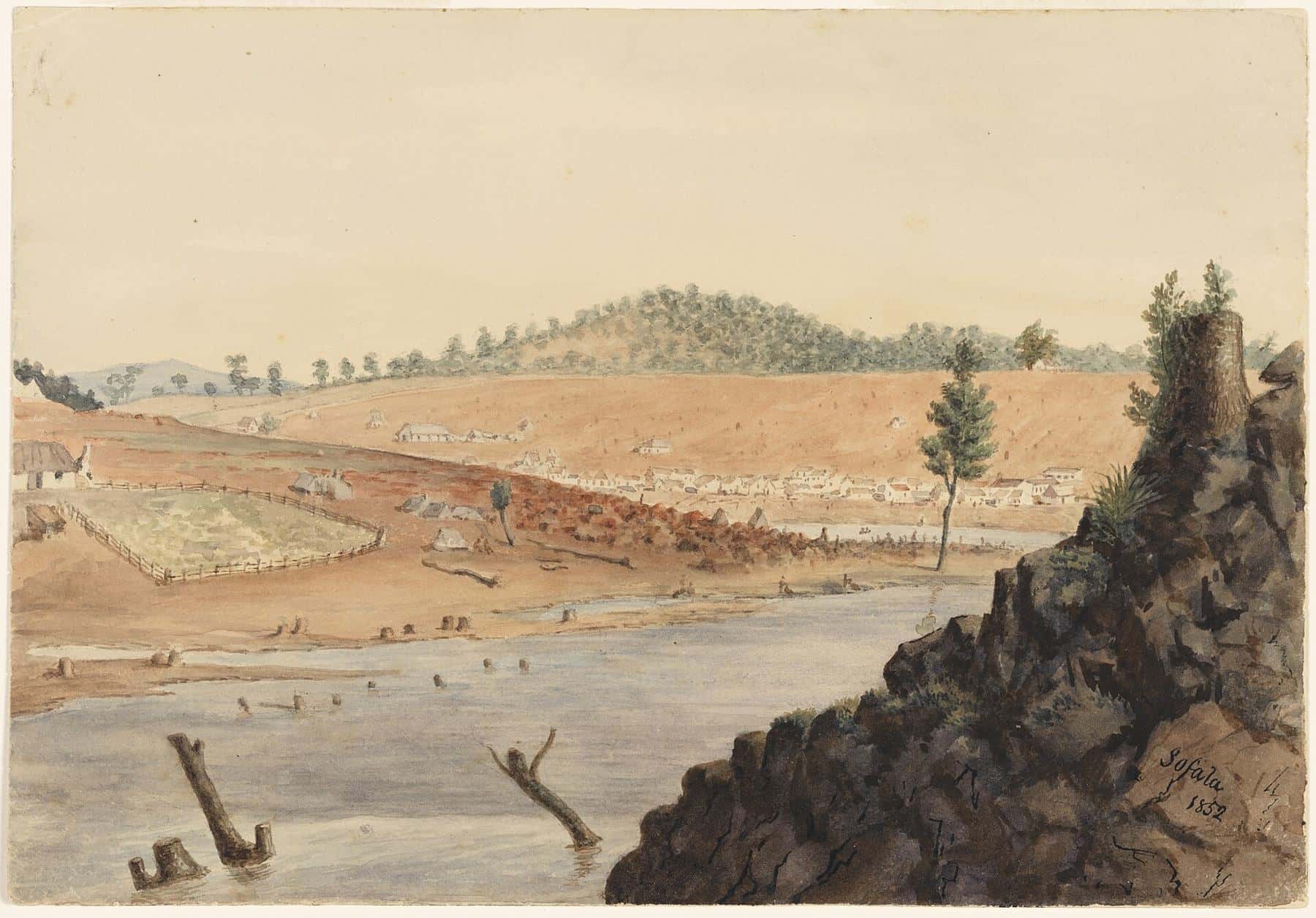
Ophir’s alluvial gold was soon outshone. In mid-1851 rich finds were made on the Turon River around Sofala, and the diggings there became the busiest in the colony. Then came the news from Victoria — Ballarat, Mount Alexander, Bendigo — and many NSW diggers headed south. Yet NSW continued to produce gold, and over the next two decades new rushes broke out at Kiandra, Lambing Flat, Forbes, Grenfell and Hill End.
Life on the early diggings
The first goldfields were canvas towns of tents and bark huts strung along the creeks. Diggers worked in small parties, sharing the labour of digging, carrying and washing. Food was expensive and often poor; water was muddied by thousands of cradles; disease spread easily. Women and children followed the rush too, running stores, boarding houses and laundries. Commissioners, police, storekeepers, publicans and carriers made their own living from the diggers. Aboriginal people saw their country overrun, while some worked as guides, trackers or miners.
Visiting the discovery country today
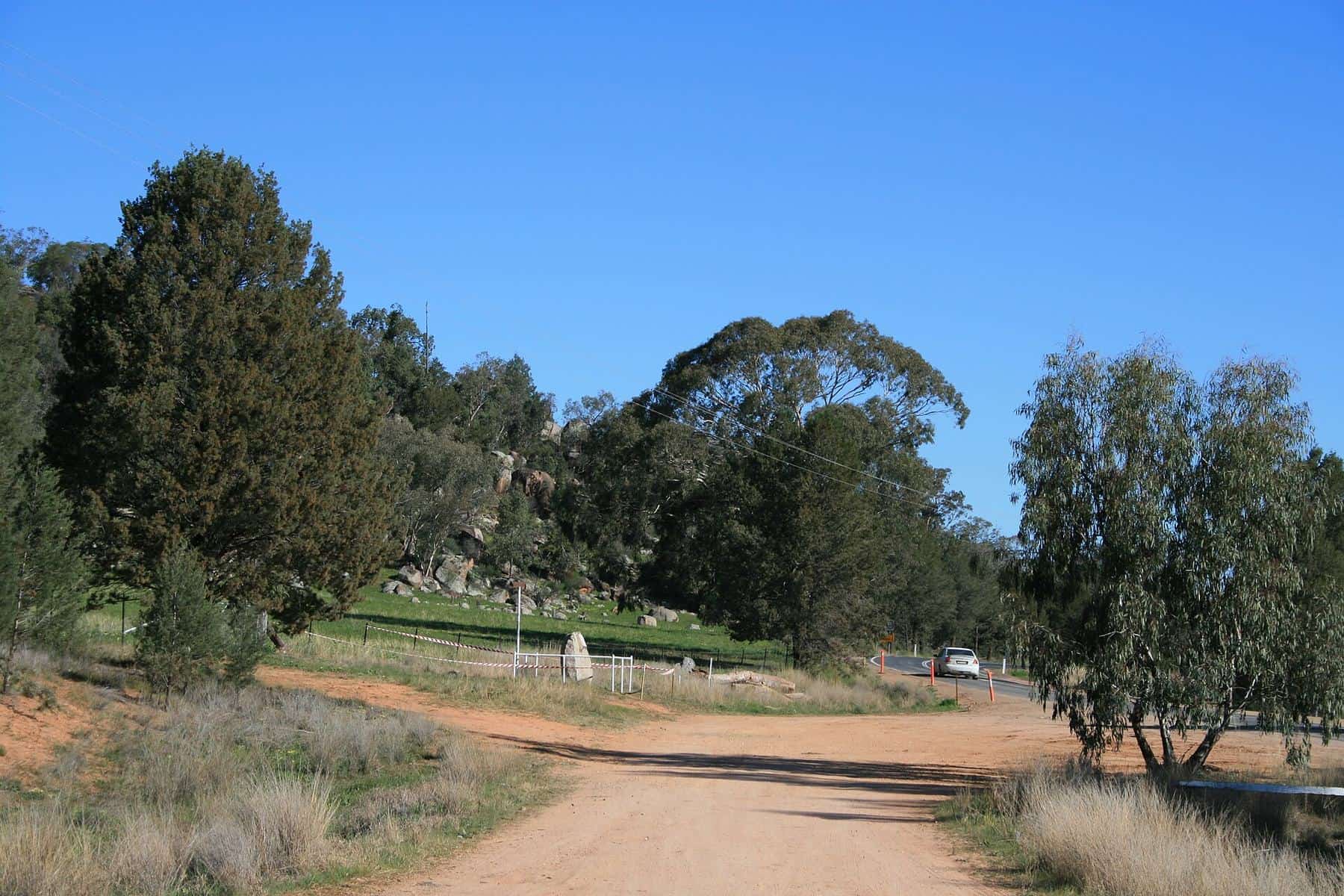
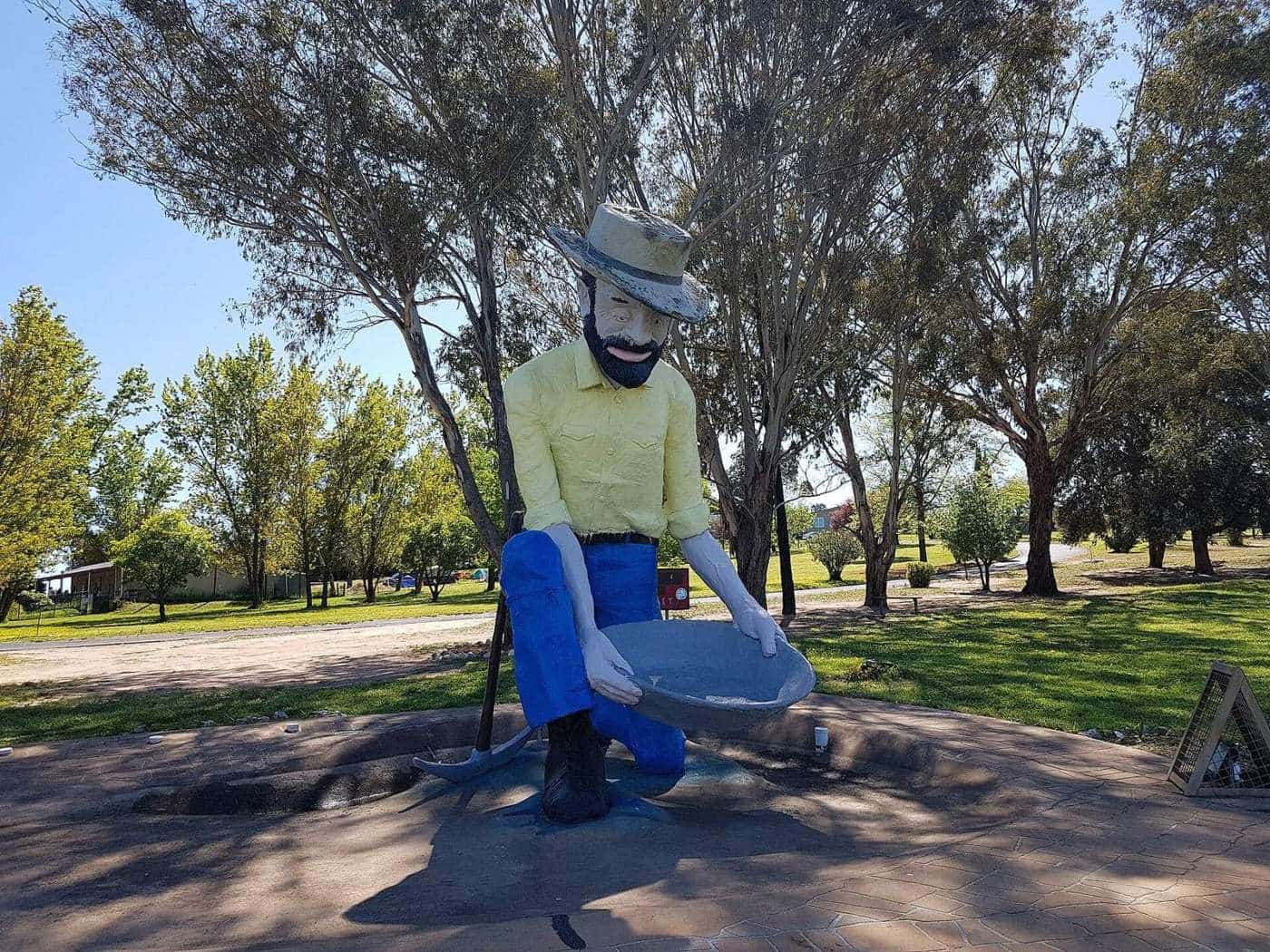
The Ophir Reserve, around 25 km north-east of Orange, marks the discovery area. It has picnic and camping areas, walking tracks to old workings, and a public fossicking area along the creek. Monuments in the district commemorate the discovery. Combine a visit with Lucknow, Orange and Bathurst on the Escort Rock Gold Trail, and try your hand at panning after reading our fossicking guide.
Frequently asked questions
Who discovered gold in Australia?
Traces of gold were noted in NSW before 1851, but the first payable goldfield was found in February 1851 at Lewis Ponds Creek near Orange by Edward Hargraves with John Lister and William and James Tom. Hargraves received the official credit and reward; Lister and the Toms were recognised by a parliamentary inquiry decades later.
What was Ophir?
Ophir was the name Edward Hargraves gave to the diggings near the junction of Lewis Ponds and Summer Hill creeks, north-east of Orange — Australia’s first payable goldfield. The site is now the Ophir Reserve.
How much did a gold licence cost in 1851?
When the NSW government introduced gold licences in May 1851, the fee was 30 shillings (one pound ten shillings) per month, payable in advance, collected by gold commissioners.
Why did the gold rush move to Victoria?
Within months of the NSW discovery, even richer alluvial gold was found in Victoria at places such as Ballarat and Bendigo. Many NSW diggers moved south, although NSW goldfields continued to produce for decades.
Sources and further reading
Facts on this page were checked against these primary and official sources. Conditions change — confirm before you travel or buy.
- Edward Hammond Hargraves — Discover Collections — State Library of NSW
- Lister and the Tom brothers — Discover Collections — State Library of NSW
- Hargraves, Edward Hammond (1816–1891) — Australian Dictionary of Biography
- The Three Colonies of Australia, Part 2, Chapter 29 (Samuel Sidney, 1853) — Wikisource