The Abercrombie Gold Trail trades highways for back roads. It leaves Goulburn, climbs onto the high country around Crookwell, then threads south-to-north through a string of small villages — Binda, Tuena, Trunkey Creek, Newbridge — that boomed briefly on gold and still keep their nineteenth-century bones. It finishes in Bathurst, with optional detours to Sofala and Hill End.
Route: Goulburn – Tarago (optional) – Crookwell – Binda – Tuena – Abercrombie Caves – Trunkey Creek – Newbridge – Bathurst – Sofala (optional) – Hill End (optional).
≈200 km
Main route
Some gravel sections
3 hrs
Driving time
Without stops
Spring/autumn
Best seasons
Cool, clear tableland weather
Before you go
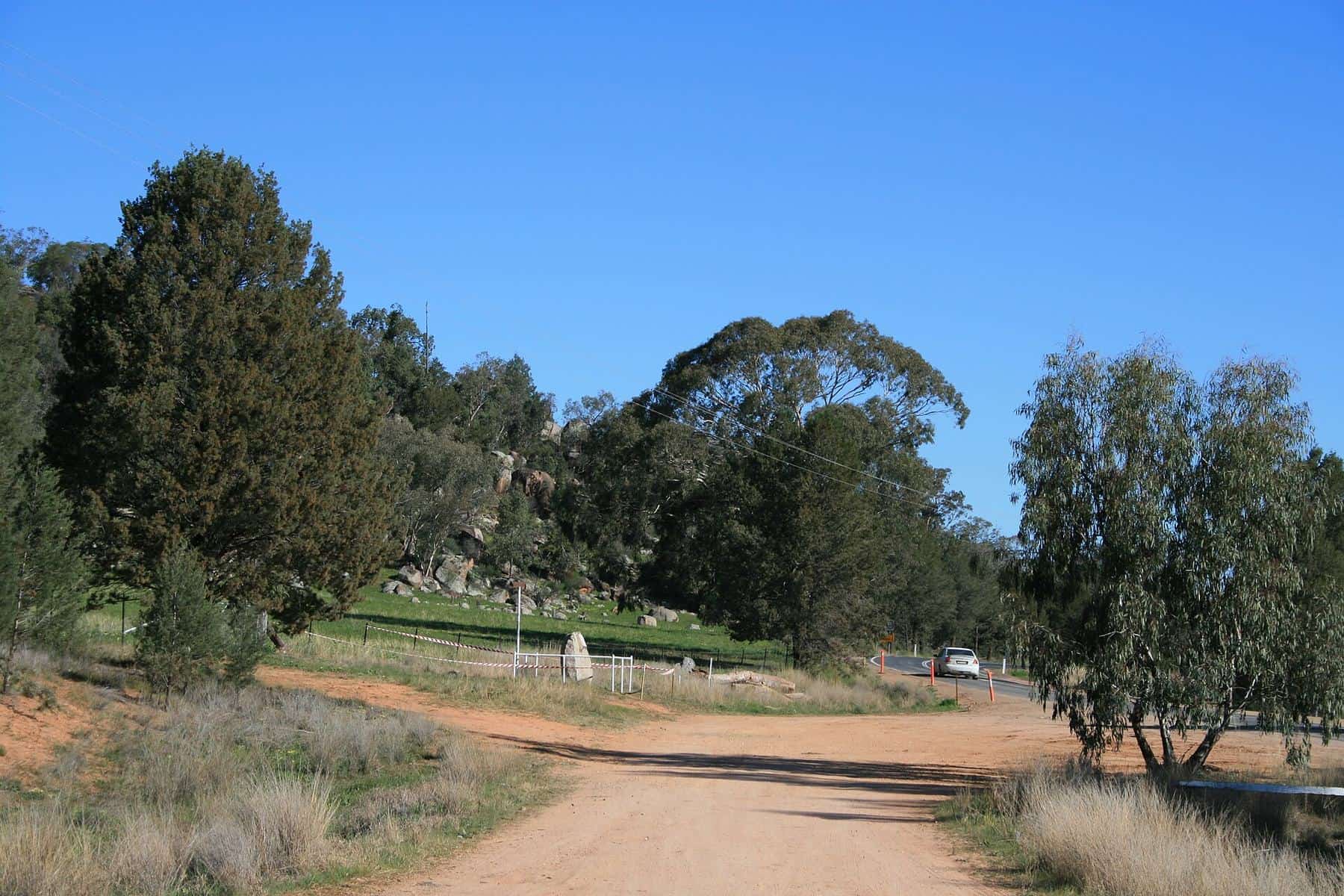
This is a trail for unhurried travellers. Roads are narrower and quieter than on the other routes, and some sections are gravel; allow extra time and drive to the conditions. Services are limited between Crookwell and Bathurst, so fuel up before you leave the larger towns, carry water and download maps. Kangaroos and wombats are common on these roads at dawn and dusk.
Goulburn
Goulburn, two hours south-west of Sydney, was proclaimed a city by letters patent in 1863 — the first inland city in Australia to receive that status. The southern goldfields’ traffic passed through, and the town’s grand courthouse, churches and commercial buildings reflect the prosperity of the period. It is a good place to stock up before the back roads.
Detour: Tarago
South-east of Goulburn, Tarago was for many years a staging post and later a railhead. Its historic hotel, the Loaded Dog, has long been associated with travellers on the Braidwood road. It is an optional start if you are coming from Canberra or the coast.
Crookwell
From Goulburn the road climbs onto the Great Dividing Range to Crookwell, a high-country town of tree-lined streets, gardens and nineteenth-century buildings. The district has goldmining and bushranger history, and is known today for potatoes, trout streams and its pioneering wind farm.
Binda
The small village of Binda takes its name from an Aboriginal word often translated as deep water; the waterholes along Binda Creek lie within the traditional lands of the Gundungurra people. Binda’s place in bushranging lore comes from Boxing Day 1864, when Ben Hall, John Gilbert and John Dunn rode in, robbed the store and gathered townspeople at the hotel, where a Christmas dance was in progress. The episode ended with a fire at the store and has been retold in many versions since.
Tuena
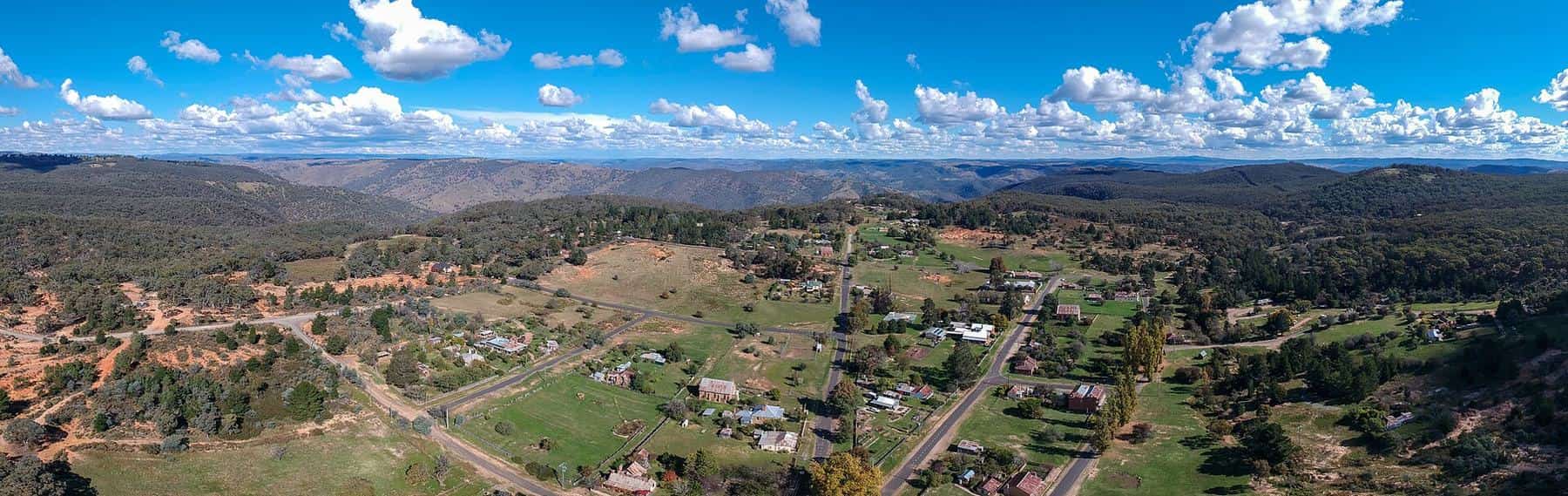
Nestled in a valley between Goulburn and Bathurst, Tuena was a gold-rush village and has kept a cluster of early buildings, including a goldfields-era inn. Today it is a quiet spot for camping, fishing, bushwalking and fossicking. Grove Creek Falls is about 15 km to the north.
Abercrombie Caves
Gold was worked in the creeks and hills around Abercrombie Caves from the early 1850s, including at nearby Mount Gray. The caves themselves are the star attraction: the Grand Arch is one of the largest natural limestone arches in the Southern Hemisphere, and the reserve has walking tracks and camping. NSW National Parks manages the reserve; check the park page for current tour and access details.
Trunkey Creek and Newbridge
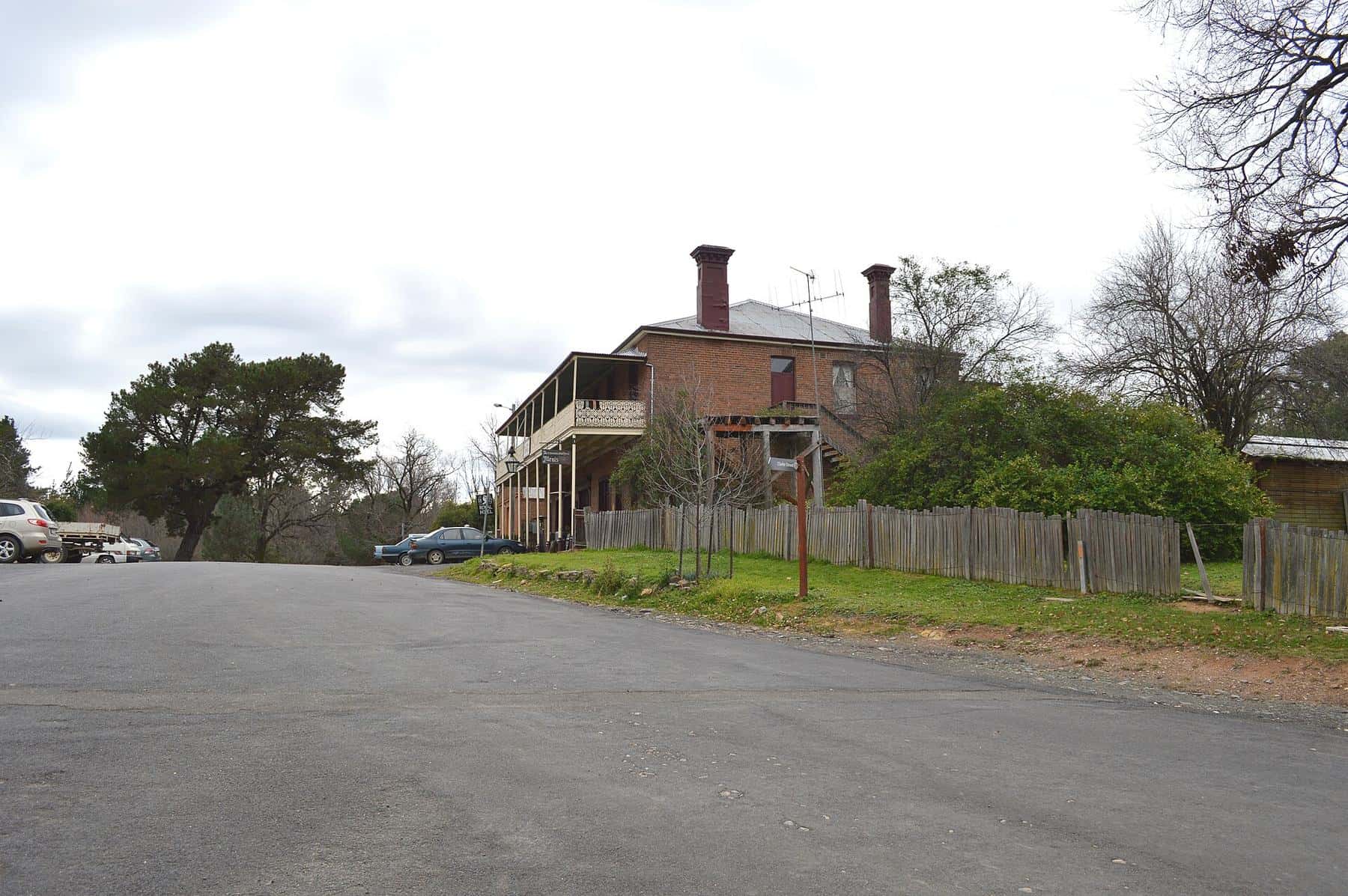
Trunkey Creek grew on alluvial gold in the 1860s and keeps a pair of historic hotels. Newbridge, closer to Bathurst, is a small village with a heritage railway station and a pub, on the edge of the rolling country that leads down to the Macquarie River.
Bathurst, Sofala and Hill End
The trail ends in Bathurst, where Edward Hargraves announced the gold discoveries in May 1851. From here, the optional detours north to Sofala on the Turon River and to Hill End — both covered in our Escort Rock trail guide and our Hill End guide — let you finish among the best-preserved goldfields landscapes in the state.
Abercrombie trail checklist
0 of 7 done
Ticks are saved in this browser only.
Suggested two-day itinerary
Day 1 — Goulburn to Abercrombie Caves. Morning in Goulburn, lunch in Crookwell, then the back roads via Binda and Tuena. Camp or stay near Abercrombie Caves, or continue to Bathurst.
Day 2 — Caves to Hill End. Explore the caves in the morning, drive through Trunkey Creek and Newbridge to Bathurst, then detour to Hill End for the afternoon.
Driving notes
This is a back-roads route. Sections between Crookwell and Tuena and on towards Trunkey Creek are narrow, winding and, in places, unsealed or poorly surfaced, with steep descents to the Abercrombie River crossing. Drive to the conditions, watch for wildlife at dawn and dusk, and check road conditions with Live Traffic NSW and the local councils after heavy rain. Fuel is limited between Crookwell and Bathurst, so fill up before you leave. Caravans and large motorhomes are better suited to the main highways.
Why the Abercrombie Caves matter
The Abercrombie Karst Conservation Reserve protects a limestone landscape carved by Grove Creek. Its centrepiece, the Grand Arch, is described by NSW National Parks and Wildlife Service as one of the largest natural limestone arches in the southern hemisphere. Gold-era miners knew the caves well: dances were held in the arch in the nineteenth century, and local stories link the area with bushrangers. Today NPWS manages the reserve, with camping, walks and cave tours; check opening days and tour times before visiting.
Where to next
From Bathurst, join the Escort Rock Gold Trail west to Forbes. See all six trails.
Frequently asked questions
Is the Abercrombie Gold Trail sealed?
Most of it is sealed, but parts of the route between Crookwell, Tuena and Trunkey Creek include gravel. Conventional cars manage it in dry weather; drive carefully after rain and check local conditions.
What is there to see at Abercrombie Caves?
Abercrombie Karst Conservation Reserve protects a series of limestone caves including the Grand Arch, one of the largest natural limestone arches in the Southern Hemisphere. Check NSW National Parks for current access and tour arrangements.
What happened at Binda in 1864?
On Boxing Day 1864, Ben Hall, John Gilbert and John Dunn rode into Binda, robbed the store and held townspeople at a hotel where a Christmas dance was under way — one of the gang’s best-remembered escapades.
Sources and further reading
Facts on this page were checked against these primary and official sources. Conditions change — confirm before you travel or buy.
- Abercrombie Karst Conservation Reserve — NSW National Parks and Wildlife Service
- Hill End Historic Site — NSW National Parks and Wildlife Service
- Hall, Benjamin (Ben) (1837–1865) — Australian Dictionary of Biography