The Southern Gold Trail is the most scenic of the six routes. It begins among the farming towns of the Hume corridor, crosses the Murrumbidgee at Gundagai, follows the creeks into the reef country around Adelong and Tumut, and climbs to the high plains at Kiandra, where a gold rush flared on the roof of the colony in 1860.
Route: Yass – Binalong – Jugiong – Gundagai – Adelong – Tumut – Kiandra.
≈270 km
Main route
Yass to Kiandra
3 hrs
Driving time
Without stops
1,400 m+
Kiandra plateau
Alpine conditions possible
Before you go
Plan this trail for the warmer months if you want to explore Kiandra on foot; from late autumn to spring the high country can be cold, wet and snowy, and the Snowy Mountains Highway may need chains. Tumut and Gundagai are the main overnight stops. Fuel up in Tumut before heading to Kiandra — there are no services on the plateau.
Yass and Binalong
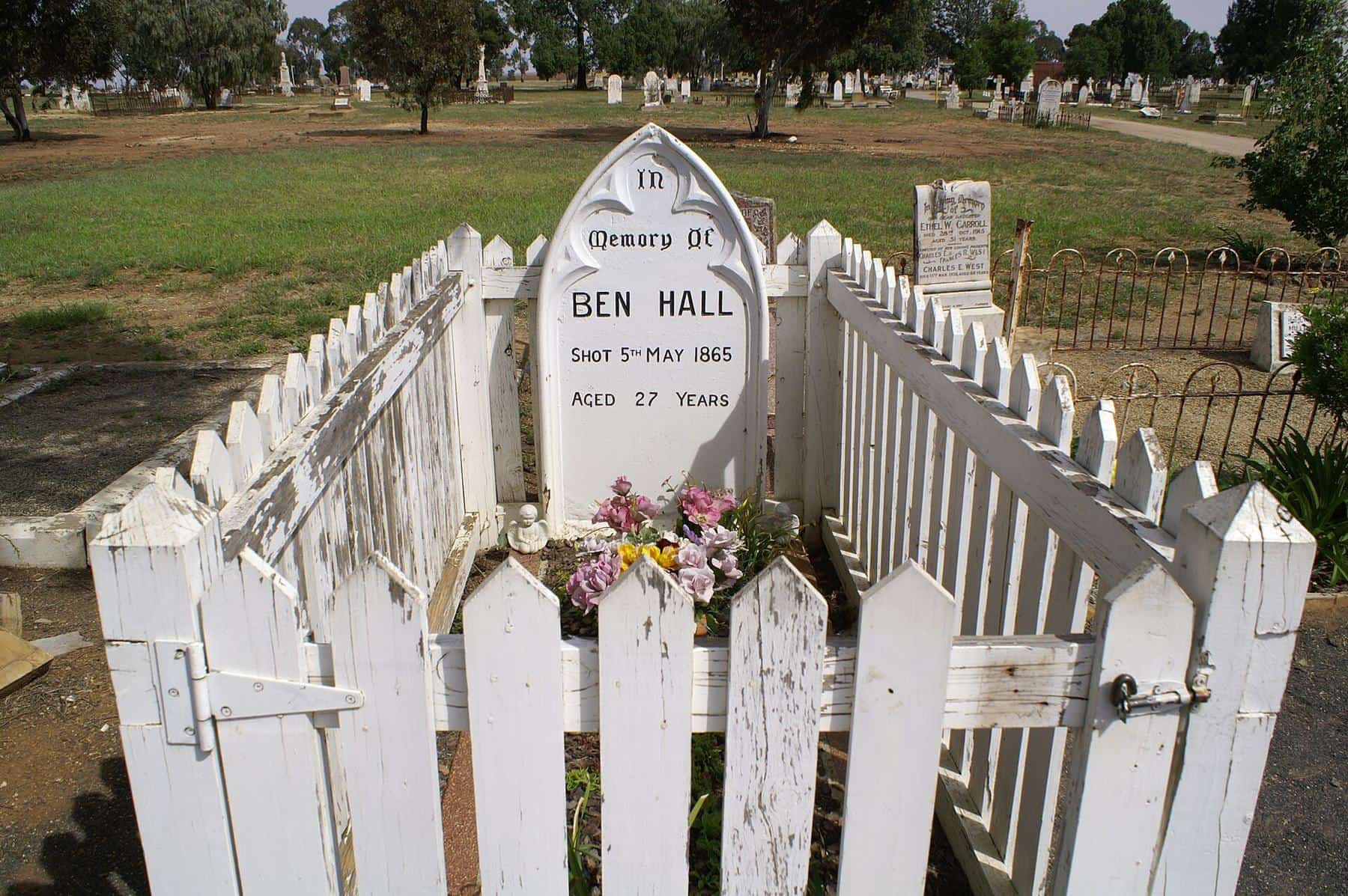
Yass was a busy staging post on the Great Southern Road during the gold years and an early centre for police operations against bushrangers. Binalong, a short drive west, holds the grave of bushranger John Gilbert, shot by police near the village in May 1865. Both towns are also on the Ben Hall Gang Gold Trail.
Jugiong
The village of Jugiong, on a bend of the Murrumbidgee, grew around a coaching inn. Near here on 16 November 1864, Johnny Gilbert, Ben Hall and John Dunn held up the mail coach; in the exchange of fire Sergeant Edmund Parry was shot and killed. Memorials in the district remember him. Jugiong is also a pleasant lunch stop with riverside picnic areas.
Gundagai
Gundagai has a story that goes beyond gold. The original town was built on the Murrumbidgee flats and in June 1852 a great flood swept it away, drowning dozens of people — one of the worst flood disasters in Australian history. Wiradjuri men, including Yarri and Jacky Jacky, paddled bark canoes through the floodwaters and rescued many survivors; they are commemorated by a bronze sculpture in the town. The town was rebuilt on higher ground.
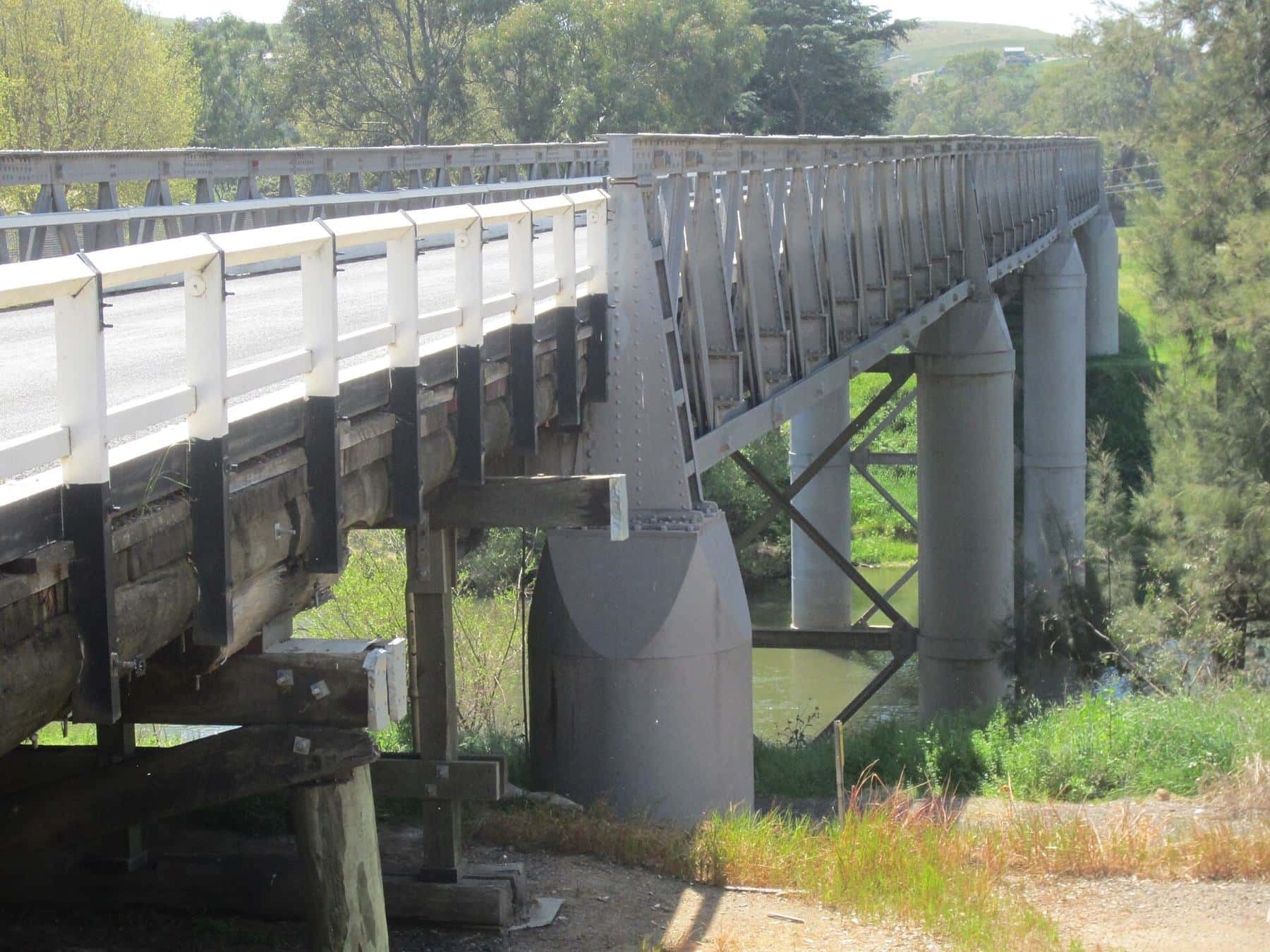
Gold mining in the district, and the coach traffic on the southern road, made Gundagai both prosperous and a target for bushrangers. Sergeant Parry is buried here, and so is Andrew George Scott — “Captain Moonlite” — who was hanged in Sydney in 1880 after a deadly siege at Wantabadgery Station near Gundagai; his remains were reburied in Gundagai in 1995. The long timber Prince Alfred Bridge across the river flats and the Dog on the Tuckerbox monument beside the Hume Highway north of town are favourite photo stops.
Adelong
The highlight of the trail for many travellers, Adelong sits on Adelong Creek in the foothills of the Snowy Mountains. Gold was found here in the 1850s, and the discovery of rich quartz reefs sustained mining for decades. The main street is classified by the National Trust, and a short walk from town the Adelong Falls Gold Mill Ruins preserve the stone walls, water race and machinery footings of a mill that crushed reef ore using water power from the creek. Walking paths and signs explain how the mill worked. It is one of the most complete gold-processing sites in NSW.
Tumut
Tumut sits beside the Tumut River in the Snowy Mountains foothills and served as a supply and service town for Adelong and the high-country fields. It is a relaxed overnight stop with riverside walks, trout fishing and autumn colour from the town’s exotic trees. Nearby Batlow is known for its apples.
Kiandra
The Snowy Mountains Highway climbs from Tumut through Talbingo and over the range to Kiandra, on the high plains of what is now Kosciuszko National Park. Gold was found here late in 1859 and, in early 1860, thousands of diggers rushed to a site that lay under snow for part of the year. Within about a year most had gone, leaving a scatter of buildings and the scars of sluicing.
Kiandra is also part of the history of skiing in Australia: miners strapped long timber boards to their feet to get around in winter, and a snow-shoe club was formed in the early 1860s. The old courthouse, restored and later damaged in the 2019–20 bushfires, and interpretive walks across the old diggings help you picture the town. Check NSW National Parks alerts before visiting, especially after fire or in winter.
Southern Gold Trail checklist
0 of 7 done
Ticks are saved in this browser only.
Suggested two-day itinerary
Day 1 — Yass to Gundagai. Leave Yass mid-morning, stop at Binalong and Jugiong, and spend the afternoon in Gundagai. Overnight in Gundagai.
Day 2 — Adelong, Tumut and Kiandra. Walk the Adelong mill ruins in the morning light, lunch in Tumut, then drive up to Kiandra in the afternoon. Continue east to Cooma or Adaminaby, or return to Tumut.
Where to next
From Gundagai, the South-Western Gold Trail heads across the wheatbelt to Temora and West Wyalong. From Yass, the Ben Hall Gang Gold Trail runs north-west to Forbes. See all six trails.
Frequently asked questions
How far is it from Yass to Kiandra on the Southern Gold Trail?
About 270 km along the main route via Gundagai, Adelong and Tumut — roughly three hours of driving without stops.
Can you visit the Adelong gold mill ruins?
Yes. The Adelong Falls Gold Mill Ruins are a short walk from the town and have walking paths and interpretive signs. Paths can be slippery after rain.
Is the road to Kiandra open in winter?
The Snowy Mountains Highway through Kiandra is generally kept open, but snow and ice are common in winter and chains may be required. Check Live Traffic NSW and NSW National Parks alerts before travelling.
Who is buried at Gundagai?
Gundagai’s cemeteries include the graves of Sergeant Edmund Parry, killed by bushrangers in 1864, and of the bushranger Andrew George Scott, known as Captain Moonlite, whose remains were reburied there in 1995.
Sources and further reading
Facts on this page were checked against these primary and official sources. Conditions change — confirm before you travel or buy.
- Adelong Falls Gold Mill Ruins — Destination NSW
- Kiandra area — Kosciuszko National Park — NSW National Parks and Wildlife Service
- Scott, Andrew George (1842–1880) — Australian Dictionary of Biography
- Live Traffic NSW — Transport for NSW