Fossicking is the small-scale, hand-powered search for gold, gemstones and minerals for recreation. It is the most direct way to connect with the history you explore on the Gold Trails — and occasionally, it pays for lunch.
The basic rules in NSW
- Get permission. On private land you need the landholder’s permission. On public land, check with the land manager — Crown land, state forest and national park each have their own rules.
- Hand tools only. Recreational fossicking means hand methods: pans, shovels, picks, hand sieves and small sluices. Mechanical diggers and powered dredges are not recreational fossicking.
- No fossicking on mining titles without permission from the title holder.
- Stay out of national parks, except in areas where NPWS specifically allows it.
- Leave it as you found it. Fill holes, don’t undercut banks, don’t damage trees or heritage relics, and take your rubbish home.
- Respect heritage. Old mine workings, huts and machinery are protected. Never remove or disturb relics.
Where to fossick on the Gold Trails
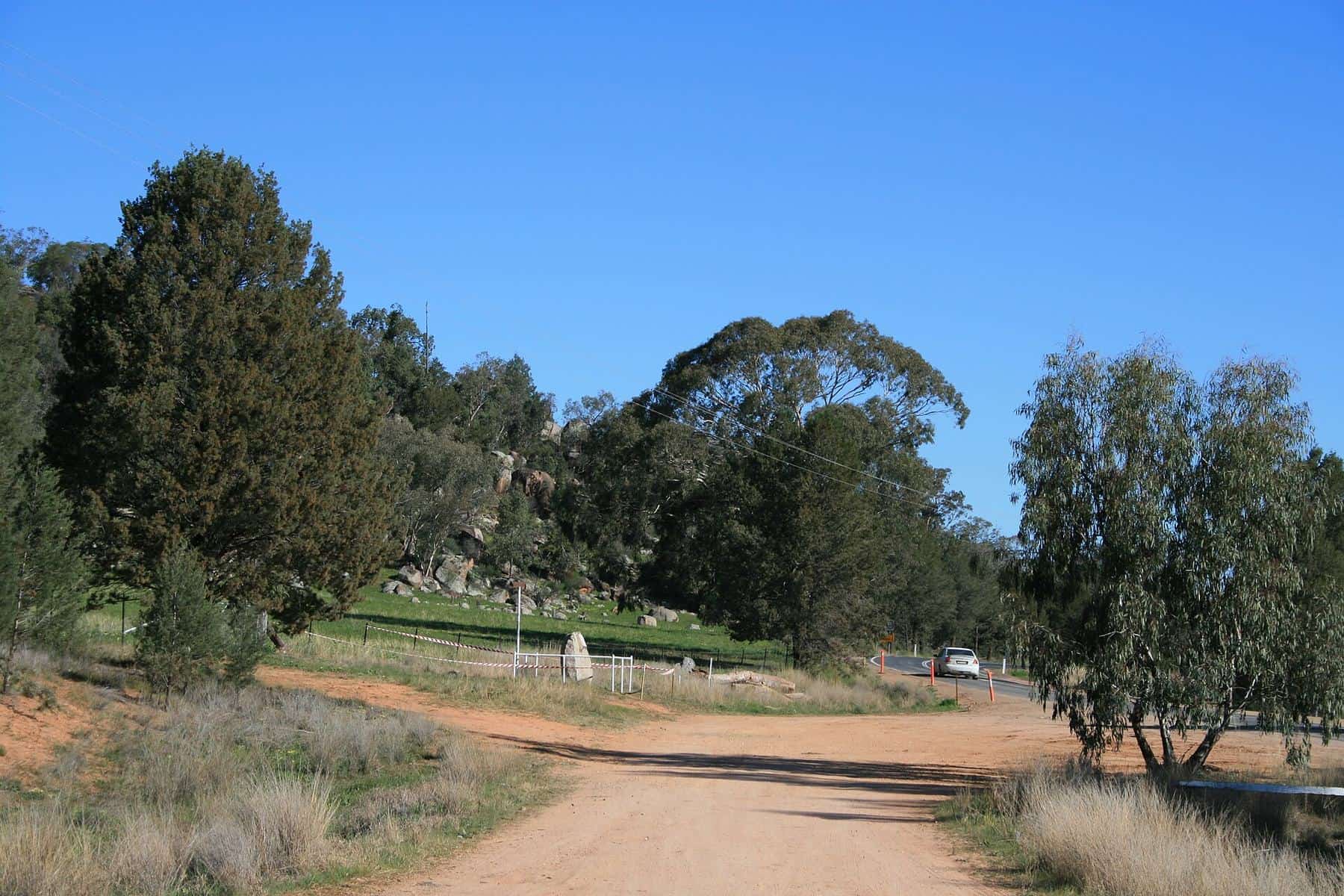
Ophir Reserve, north of Orange, is where the first payable gold rush began in 1851. It is a pleasant reserve on Summer Hill Creek with picnic areas and is a popular spot for panning.
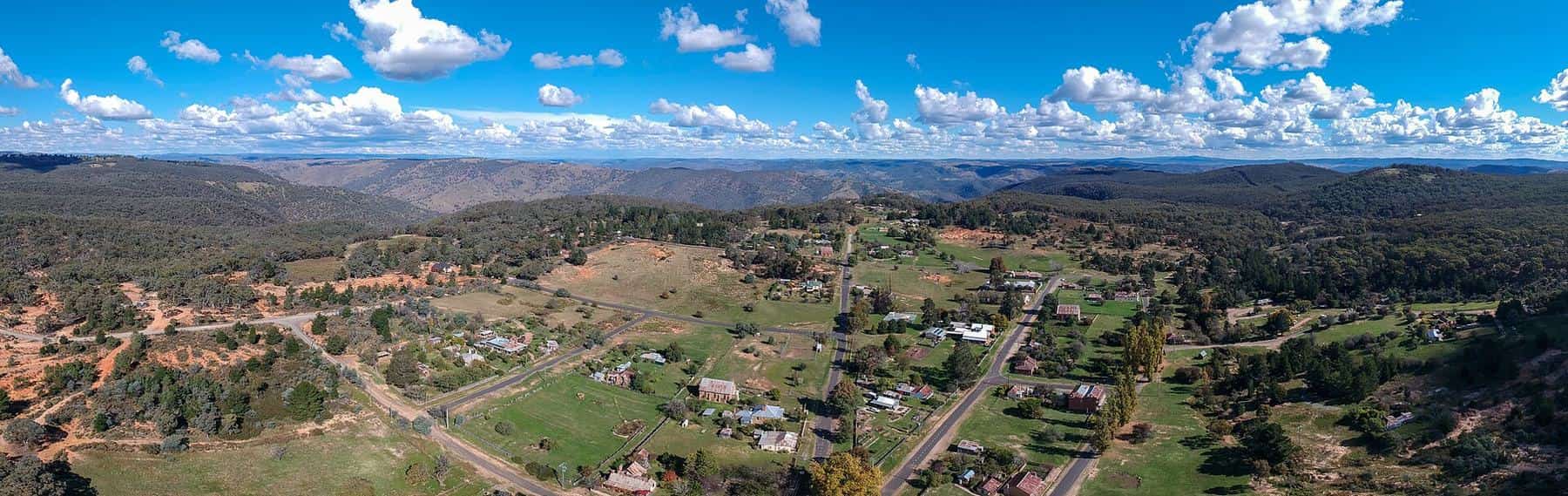
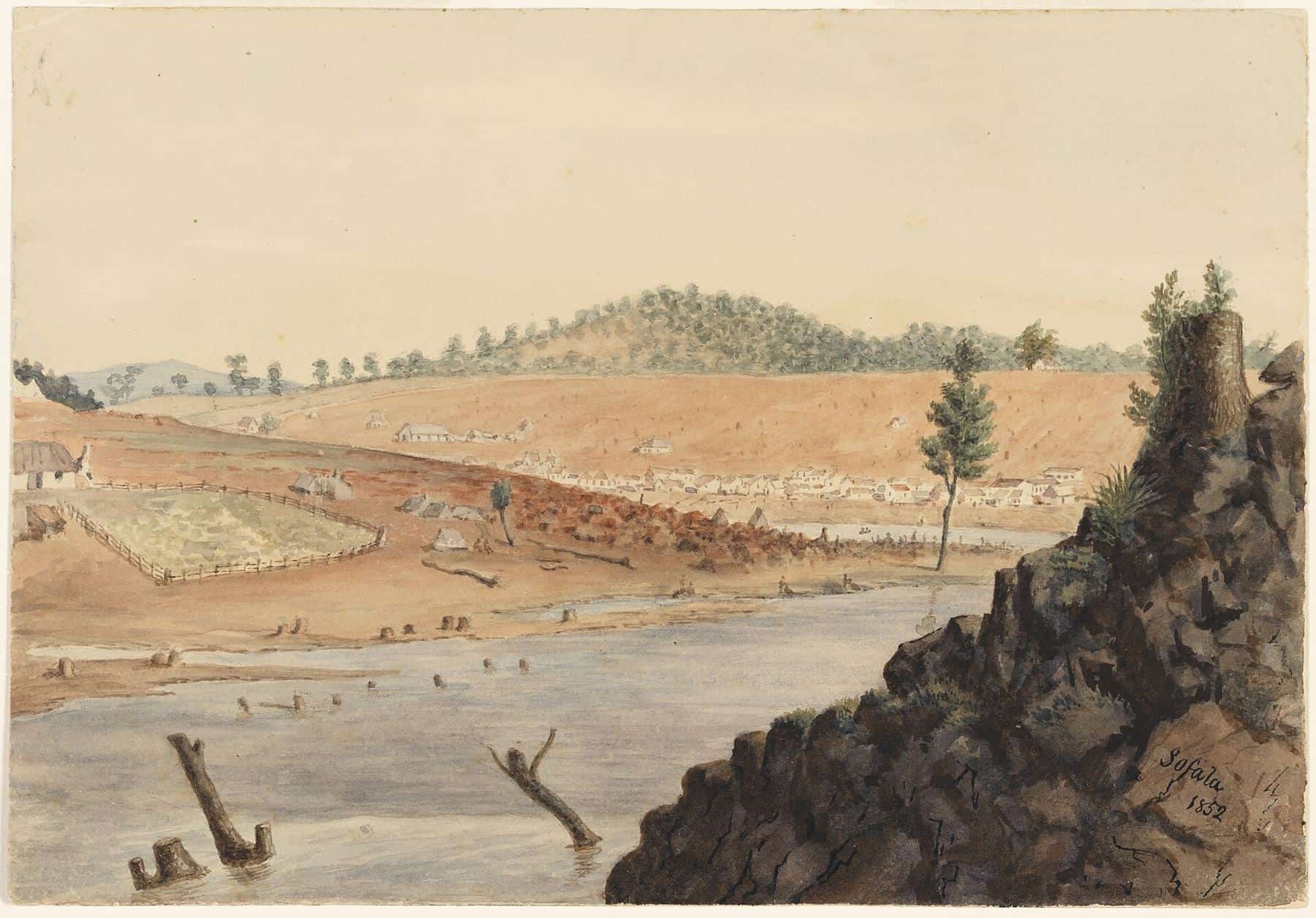
The Turon River at Sofala has drawn gold-seekers since 1851. Public access points along the river are popular for panning; check signage for any closed or private sections.
Hill End has designated fossicking areas within the historic site. Ask at the NPWS visitor centre for current locations. Read our Hill End guide.
Rivers in the Abercrombie and southern districts — including the Abercrombie and Adelong areas — also have a fossicking tradition. Local visitor centres are the best source of current public access.
What you need
Beginner fossicking kit
0 of 8 done
Ticks are saved in this browser only.
How to pan for gold
- Find the right spot. Gold is heavy and settles where water slows: on the inside of bends, behind large rocks, in cracks in bedrock and at the head of gravel bars.
- Classify. Sieve gravel into your pan to remove large stones.
- Submerge and shake. Hold the pan under water and shake it side to side so heavy material sinks.
- Wash off the top. Tilt the pan slightly away and swirl, letting water carry off the light material over the lip.
- Repeat until only heavy black sand remains.
- Look for colour. Swirl gently with a little water. Gold stays put and does not break up; pyrite (“fool’s gold”) is brassy and crumbles.
- Collect. Use the snuffer bottle or tweezers to lift specks into a vial.
Metal detecting
Metal detecting is popular on the old goldfields. The same permission rules apply, and you must fill every hole. Detecting is not permitted in most national parks or historic sites.
Reading the old goldfields
Even if you find nothing, the landscape itself is worth learning to read. Look for mullock heaps, the mounds of waste rock beside old shafts; races, the hand-dug channels that carried water to sluices; tailings, banks of washed gravel along creeks; and lines of puddling pits. Exotic trees, fruit trees and old roses often mark the sites of miners’ huts. All of these are heritage features: look, photograph and enjoy, but leave them undisturbed.
Gems as well as gold
NSW fossicking is not only about gold. The New England region, around Inverell and Glen Innes, is known for sapphires, and Lightning Ridge in the north-west is famous for black opal, with its own fossicking areas and tourist mines. The same principles apply everywhere: hand tools, permission and respect for the land.
Fossicking with children
Gold panning is a great family activity. Choose shallow, slow-flowing water, bring a change of clothes, and set realistic expectations: a few tiny flecks in a vial is a good result. Supervise children closely near water and away from old workings.
Safety
- Watch the weather: creeks rise quickly after rain upstream.
- Never enter old mine shafts or tunnels. Many are unstable or hidden.
- Let someone know where you are going — mobile coverage is patchy in gold country.
- Carry plenty of water, especially in summer, and know the day’s fire danger rating.
Why the gold is still there
The 1850s miners worked fast and with simple equipment. Floods have moved gravel ever since, and small amounts of fine gold continue to be redistributed through creek systems. Few modern fossickers find much — but many find a few specks, and that is often enough. To understand where the gold came from, read how gold was discovered in NSW.
Frequently asked questions
Do you need a licence to fossick in NSW?
NSW does not require a general fossicking licence for recreational fossicking with hand tools. You must follow the rules for the land you are on and get permission from the landholder or manager.
Can I keep the gold I find?
Recreational fossickers can generally keep small quantities found for personal use when fossicking legally. Check the rules for the specific area you visit, as some reserves set limits.
Can you fossick in national parks?
Generally no, except in specific areas where NPWS permits it, such as designated sites within some historic sites. Always check signs and NPWS guidance before you dig.
Where is a good place to start gold panning in NSW?
Popular public spots near Bathurst and Orange include Ophir Reserve, the Turon River around Sofala and designated areas at Hill End. Ask local visitor centres for current access.
Sources and further reading
Facts on this page were checked against these primary and official sources. Conditions change — confirm before you travel or buy.
- Fossicking in NSW — NSW Department of Regional NSW — Mining, Exploration and Geoscience
- Hill End Historic Site — NSW National Parks and Wildlife Service
- Ophir Reserve — Orange360 regional tourism